
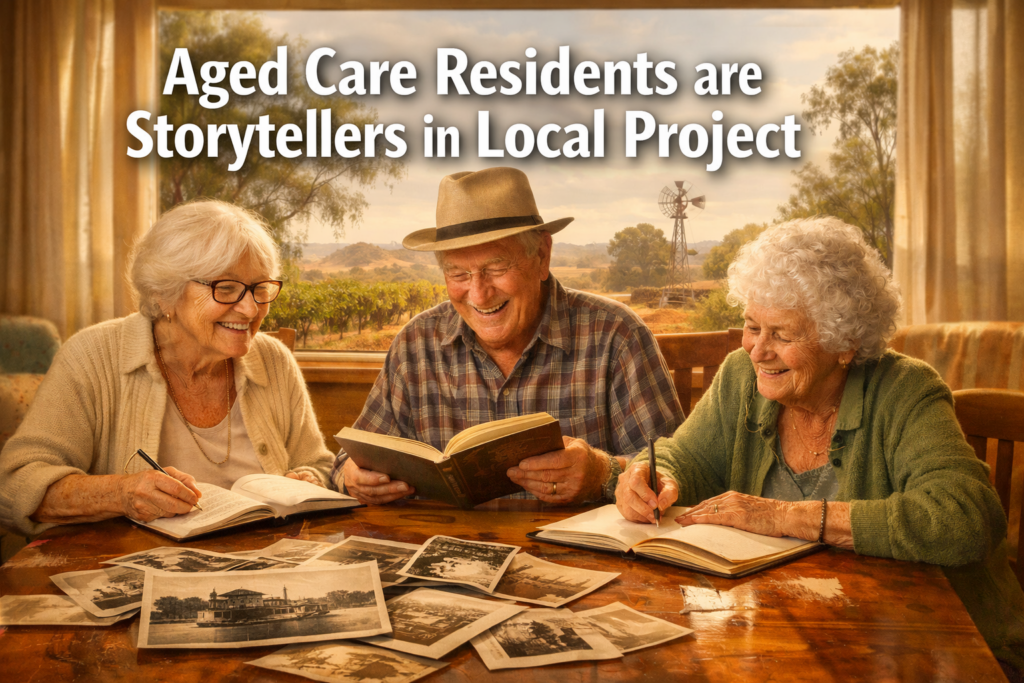
Imagine opening a book and finding your grandmother’s voice speaking directly from the pages—not through fiction, but through her own words, memories, and lived experiences. That’s exactly what’s happening in Mildura, where aged care residents are storytellers in a local project that’s transforming how we preserve and celebrate community history. 📚
In a heartwarming initiative that began in 2020, local writers partnered with Monash University and 14 residents of Princes Court Mildura to create something truly special: a four-hundred-page anthology called Mallee Living Histories. This wasn’t just another community project—it became a movement that gave voice to those who’ve witnessed decades of change in regional Australia, and whose stories might otherwise have been lost to time.
The response has been nothing short of extraordinary. What started as a single book launch in December 2020 has blossomed into multiple editions, with demand so high that publishers have had to run additional print runs. “For the first book, we had to do a double publish,” says Princes Court CEO Jenny Garonne. “And we’ve had to do the same with the second book! And we’re now looking at publishing a third.”
This project represents something deeper than just preserving memories—it’s about recognizing the inherent value and dignity of our elderly community members as the storytellers they truly are.
Key Takeaways
✅ Community-driven storytelling project in Mildura partnered aged care residents with professional writers and Monash University to create published anthologies of life stories
✅ Overwhelming local demand led to multiple reprints and additional volumes, demonstrating strong community appetite for preserving local history through personal narratives
✅ Intergenerational connection was fostered through the project, giving elderly residents purpose, validation, and a lasting legacy for future generations
✅ Replicable model provides a blueprint for other aged care facilities and communities to implement similar storytelling initiatives
✅ COVID-19 adaptation showed how meaningful projects can proceed even during challenging circumstances, maintaining resident engagement and wellbeing
The Power of Story: Why Aged Care Residents Make Perfect Narrators
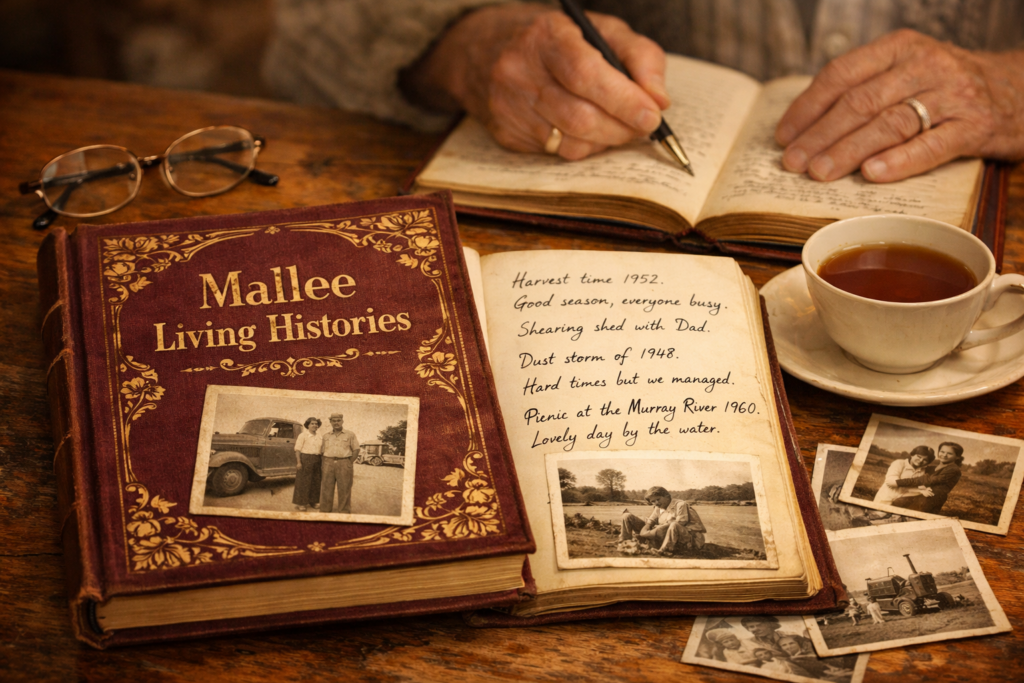
There’s something profoundly moving about listening to someone who’s lived through eight, nine, or even ten decades of history. When aged care residents are storytellers in local projects like Mildura’s initiative, they become living bridges between past and present.
Living Libraries in Our Communities
I’ve always thought of elderly residents as walking libraries—each one containing thousands of stories, experiences, and insights that can never be replicated. Unlike history books written from a distance, these are firsthand accounts of:
- Daily life in bygone eras: What it was really like to grow up without electricity, television, or the internet
- Major historical events: Personal perspectives on wars, economic depressions, and social movements
- Community evolution: Witnessing towns transform from dusty outposts to thriving regional centers
- Cultural traditions: Preserving customs, recipes, and practices that might otherwise disappear
- Personal resilience: Stories of overcoming hardship, loss, and challenge that inspire younger generations
The Mallee region, where Mildura is located, has a particularly rich history. This semi-arid area of northwestern Victoria was transformed through irrigation schemes in the late 19th century, attracting settlers from around the world. The residents of Princes Court would have witnessed dramatic changes—from agricultural innovations to demographic shifts to technological revolutions.
The Therapeutic Value of Storytelling
Research consistently shows that reminiscence therapy and life story work have significant benefits for elderly individuals, particularly those in aged care settings [1]. When residents participate in storytelling projects, they experience:
Cognitive benefits: Engaging memory, organizing thoughts chronologically, and articulating complex experiences helps maintain mental acuity.
Emotional wellbeing: Sharing life stories validates experiences, reinforces identity, and provides a sense of purpose and accomplishment.
Social connection: The collaborative nature of working with writers creates meaningful relationships and combats isolation—a critical concern in aged care communities.
Legacy creation: Knowing their stories will be preserved and read by future generations provides deep satisfaction and peace.
“Every person has a story worth telling. The residents at Princes Court have lived through incredible times, and their perspectives deserve to be heard and preserved.” — Jenny Garonne, Princes Court CEO
How the Mallee Living Histories Project Came to Life
The journey from concept to published anthology involved careful planning, dedicated collaboration, and a genuine commitment to honoring the residents’ voices. Understanding how this project unfolded provides a roadmap for other communities looking to implement similar initiatives.
The Partnership Model
The success of this project rested on three key pillars:
1. Academic Expertise (Monash University)
Monash University brought scholarly rigor and methodological expertise to the project. Their involvement ensured that:
- Ethical considerations were properly addressed
- Interview techniques were trauma-informed and respectful
- Historical context was accurately represented
- The project had academic credibility and research value
2. Professional Writing Skills (Local Writers)
Local writers served as the crucial bridge between residents and readers. Their role included:
- Conducting sensitive, in-depth interviews
- Transcribing and organizing oral histories
- Crafting narratives that preserved authentic voices while ensuring readability
- Editing and refining stories without losing their essential character
3. Lived Experience (Princes Court Residents)
The 14 participating residents were the heart of the project. They:
- Shared deeply personal memories and experiences
- Provided historical insights unique to the Mallee region
- Collaborated on how their stories should be told
- Reviewed drafts to ensure accuracy and authenticity
The Process: From Interview to Published Page
Creating Mallee Living Histories involved several distinct phases:
| Phase | Duration | Key Activities |
|---|---|---|
| Planning & Recruitment | 2-3 months | Securing partnerships, identifying interested residents, establishing ethical protocols |
| Interview Sessions | 3-4 months | Multiple conversations with each resident, building trust, exploring life themes |
| Transcription & Writing | 4-6 months | Converting oral histories to written narratives, fact-checking, organizing chronologically |
| Review & Editing | 2-3 months | Residents reviewing their stories, making revisions, finalizing content |
| Publication Preparation | 2-3 months | Professional editing, design, layout, printing arrangements |
| Launch & Distribution | Ongoing | Book launch event, community distribution, media coverage |
The entire process took approximately 18 months from conception to the December 2020 launch—a timeline that included navigating the unprecedented challenges of COVID-19 restrictions.
Navigating COVID-19 Challenges
The pandemic added significant complexity to the project. Aged care facilities faced strict lockdowns to protect vulnerable residents, making in-person interviews challenging or impossible at times.
The team adapted by:
- Scheduling interviews during brief windows when restrictions eased
- Implementing rigorous safety protocols including PPE, social distancing, and sanitization
- Using technology where appropriate for follow-up questions and clarifications
- Extending timelines to accommodate disruptions without rushing the process
- Planning a modified launch event that prioritized safety while still celebrating the achievement
Despite these obstacles, the project proceeded—demonstrating that meaningful engagement with aged care residents can continue even during challenging circumstances. This resilience speaks to the importance of such initiatives for resident wellbeing, similar to other innovative programs like Cycling Without Age that brings freedom to seniors.
The Stories Within: What Makes These Narratives Special
What exactly fills the four hundred pages of Mallee Living Histories? While I haven’t read every story (and each resident’s narrative is unique), projects like this typically capture several types of memories and experiences.
Themes That Emerge from Life Story Work
Childhood in a Different Era 🏡
Many residents would have grown up in the 1930s, 40s, or 50s—times of significant hardship but also strong community bonds. Their stories likely include:
- Growing up during the Great Depression
- Wartime experiences on the home front
- Simple pleasures before modern entertainment
- Family structures and traditional gender roles
- Educational experiences in one-room schoolhouses
Working Life and Career Journeys 💼
The Mallee region’s economy has been dominated by agriculture, particularly fruit growing and viticulture. Residents’ work stories might cover:
- Physical labor in orchards and vineyards
- The introduction of mechanization and technology
- Small business ownership in rural communities
- Women’s changing roles in the workforce
- Retirement transitions and adjustments
Love, Family, and Relationships ❤️
Universal human experiences take on unique flavors in different times and places:
- Courtship customs from decades past
- Marriage and partnership through changing social norms
- Raising children across multiple generations
- Coping with loss and grief
- Maintaining family connections across distances
Community Life and Social Change 🤝
Regional communities like Mildura have transformed dramatically over the past 70-80 years:
- Local events, festivals, and traditions
- The role of churches and community organizations
- Immigration waves that changed community demographics
- Infrastructure development and modernization
- Environmental changes and challenges in the Mallee region
The Authentic Voice Matters
One of the most important aspects of the Mallee Living Histories project is that it preserves the authentic voices of the residents. These aren’t stories filtered through a historian’s academic lens or sensationalized for entertainment value—they’re genuine, personal accounts told in the residents’ own words.
This authenticity creates several benefits:
For readers: The narratives feel immediate and real, creating emotional connections that dry historical accounts can’t match.
For residents: Seeing their own words in print validates their experiences and reinforces their identity and dignity.
For families: Descendants have a precious record of their loved ones’ voices and perspectives that will outlast memory.
For historians: Future researchers gain primary source material that provides nuanced insights into daily life and personal experiences.
The Unexpected Success: Why These Books Are Flying Off Shelves
Jenny Garonne’s surprise at having to do double print runs for both the first and second volumes reveals something important: there’s a hunger in communities for these types of stories that publishers and organizers often underestimate.
Understanding the Demand
Why have the Mallee Living Histories books been so popular? Several factors contribute:
1. Local Connection and Pride 🌟
People love reading about places they know and recognize. When residents describe streets, businesses, landmarks, and events from Mildura’s past, local readers experience:
- Recognition and nostalgia for places they remember
- Discovery of historical details about familiar locations
- Pride in their community’s history and heritage
- Connection to the people who shaped their region
2. Intergenerational Appeal
These books attract multiple generations:
- Elderly readers relate to the experiences and remember similar times
- Middle-aged readers recognize stories their parents or grandparents told
- Younger readers gain perspective on how different life used to be
- Families use the books as conversation starters across generations
3. The Human Element
In an age of digital media and algorithm-driven content, there’s something deeply appealing about real human stories. These aren’t influencers or celebrities—they’re ordinary people who lived extraordinary lives simply by persevering through decades of change.
4. Educational Value
Local schools, libraries, and historical societies recognize the books’ value for:
- Teaching local history in engaging ways
- Providing primary sources for student research
- Preserving cultural heritage for future generations
- Supporting curriculum objectives around oral history
Comparison to Similar Projects
The Mallee Living Histories project isn’t unique—similar initiatives have succeeded across Australia and internationally. However, few have achieved the same level of community engagement and commercial success.
Some comparable projects include:
- StoryCorps (United States): A national oral history project that has recorded hundreds of thousands of interviews
- The Moth (International): Live storytelling events that celebrate personal narratives
- Australian War Memorial oral histories: Preserving veterans’ stories for historical record
- Various aged care facility memory books: Often smaller-scale, internal publications
What sets the Mildura project apart is its professional publication quality, academic partnership, and community-wide distribution—making it accessible beyond just residents’ immediate families.
Aged Care Residents Are Storytellers: The Broader Impact on Community Wellbeing
When aged care residents are storytellers in local projects like this one, the benefits ripple far beyond the individuals directly involved. The impact touches multiple aspects of community life and wellbeing.
Breaking Down Ageism and Isolation
One of the most insidious challenges facing elderly Australians is ageism—the systematic stereotyping and discrimination against people because of their age [2]. When society views older adults primarily as:
- Burdens on the healthcare system
- Technologically incompetent
- Out of touch with modern life
- Past their productive years
- Lacking in value or contribution
…we create conditions for isolation, depression, and diminished quality of life.
Projects like Mallee Living Histories directly counter these harmful stereotypes by:
✅ Positioning elderly residents as experts with valuable knowledge and experience
✅ Creating intergenerational dialogue where younger people actively seek out older adults’ perspectives
✅ Demonstrating continued creativity and productivity well into advanced age
✅ Providing purpose and meaningful engagement that supports mental health
✅ Validating life experiences and reinforcing dignity and worth
Strengthening Community Identity
Every community has a story—a narrative about who they are, where they came from, and what they value. The Mallee Living Histories project contributes to Mildura’s collective identity by:
Preserving local knowledge: Details about places, events, and people that might otherwise be forgotten
Celebrating resilience: Stories of how the community overcame challenges and hardships
Documenting change: A record of how Mildura evolved over decades
Honoring diversity: Multiple perspectives that reflect the community’s complexity
Creating shared touchstones: Common references that residents can discuss and relate to
This strengthened identity has practical benefits, including increased civic engagement, community pride, and social cohesion—all factors that contribute to overall wellbeing and quality of life.
A Model for Other Facilities
Perhaps the most significant impact is that the Mallee Living Histories project provides a replicable model for other aged care facilities, retirement communities, and regional areas. The success demonstrates that:
- Such projects are feasible even with limited resources
- Community demand exists for these types of publications
- Academic-community partnerships can work effectively
- Residents are willing and able to participate meaningfully
- The benefits justify the time and effort investment
For those interested in exploring the pros and cons of retirement village living, projects like this highlight one of the significant advantages: opportunities for meaningful engagement and legacy creation that might be harder to access when living independently.
Practical Steps: How to Start a Similar Project in Your Community
Inspired by the Mildura example? Here’s a practical roadmap for launching a similar storytelling project with aged care residents in your area.
Phase 1: Planning and Partnership Building (2-3 months)
Step 1: Identify Key Stakeholders
Your project will need:
- An aged care facility or retirement community willing to participate
- Writers or journalists with interviewing skills and sensitivity
- An academic or historical institution (optional but valuable for credibility)
- Funding sources (grants, sponsors, community organizations)
- Publishing expertise (local publishers, self-publishing platforms, or printing services)
Step 2: Develop Project Scope
Decide on:
- How many residents will participate (start small—5-10 is manageable)
- What format the final product will take (book, digital archive, exhibition)
- Timeline and milestones
- Budget requirements
- Ethical protocols and consent processes
Step 3: Secure Necessary Approvals
Ensure you have:
- Facility management approval
- Ethics clearance (especially if affiliated with a university)
- Resident consent (including capacity assessments where needed)
- Family notification and support
Phase 2: Recruitment and Relationship Building (1-2 months)
Step 4: Identify Interested Residents
Work with facility staff to:
- Explain the project to residents
- Gauge interest and willingness to participate
- Assess cognitive ability and communication capacity
- Consider diversity of experiences and backgrounds
Step 5: Match Writers with Residents
Create partnerships based on:
- Personality compatibility
- Shared interests or backgrounds
- Logistical considerations (scheduling, location)
- Writer experience and skill level
Step 6: Build Trust
Before diving into life stories:
- Have informal “getting to know you” conversations
- Explain the process clearly and answer questions
- Discuss boundaries and sensitive topics
- Establish communication preferences
Phase 3: Interview and Story Collection (3-6 months)
Step 7: Conduct Multiple Interview Sessions
Best practices include:
- Multiple shorter sessions rather than one long interview
- Open-ended questions that invite storytelling rather than yes/no answers
- Active listening with minimal interruption
- Recording (with permission) to ensure accuracy
- Follow-up questions to explore interesting threads
- Flexibility to follow the resident’s interests and energy levels
Sample questions might include:
- “What’s your earliest memory?”
- “Tell me about your parents and what they were like.”
- “What was school like when you were young?”
- “How did you meet your spouse/partner?”
- “What was your first job?”
- “What historical events do you remember most vividly?”
- “What advice would you give to younger generations?”
Step 8: Transcribe and Organize
After interviews:
- Transcribe recordings accurately
- Organize material thematically or chronologically
- Identify gaps or areas needing clarification
- Conduct follow-up interviews as needed
Phase 4: Writing and Review (3-4 months)
Step 9: Craft the Narratives
Writers should:
- Preserve the resident’s authentic voice and language
- Organize stories in a coherent, readable structure
- Provide context where needed without overwhelming the personal narrative
- Balance detail with readability
- Include photographs if available
Step 10: Review with Residents
This crucial step ensures:
- Accuracy of facts and details
- Comfort with what’s being shared publicly
- Proper representation of their voice and intent
- Opportunity for additions or corrections
Step 11: Edit and Finalize
Professional editing should address:
- Grammar and clarity without changing voice
- Consistency across multiple stories
- Fact-checking historical references
- Appropriate handling of sensitive content
Phase 5: Publication and Launch (2-3 months)
Step 12: Prepare for Publication
Decisions include:
- Book design and layout
- Cover design
- Printing specifications and quantity
- Pricing (if selling) or distribution plan
- ISBN and cataloging information
Step 13: Plan the Launch Event
Create a celebration that:
- Honors the participating residents
- Involves families and the broader community
- Generates media coverage
- Provides opportunity for residents to share excerpts
- Includes book sales or distribution
Step 14: Distribute and Promote
Ensure the stories reach audiences through:
- Local bookstores and libraries
- Community centers and historical societies
- Schools for educational use
- Online platforms and social media
- Media coverage in local newspapers and radio
For additional inspiration on meaningful activities for retirees, check out this guide on things to do in retirement.
Overcoming Common Challenges in Storytelling Projects
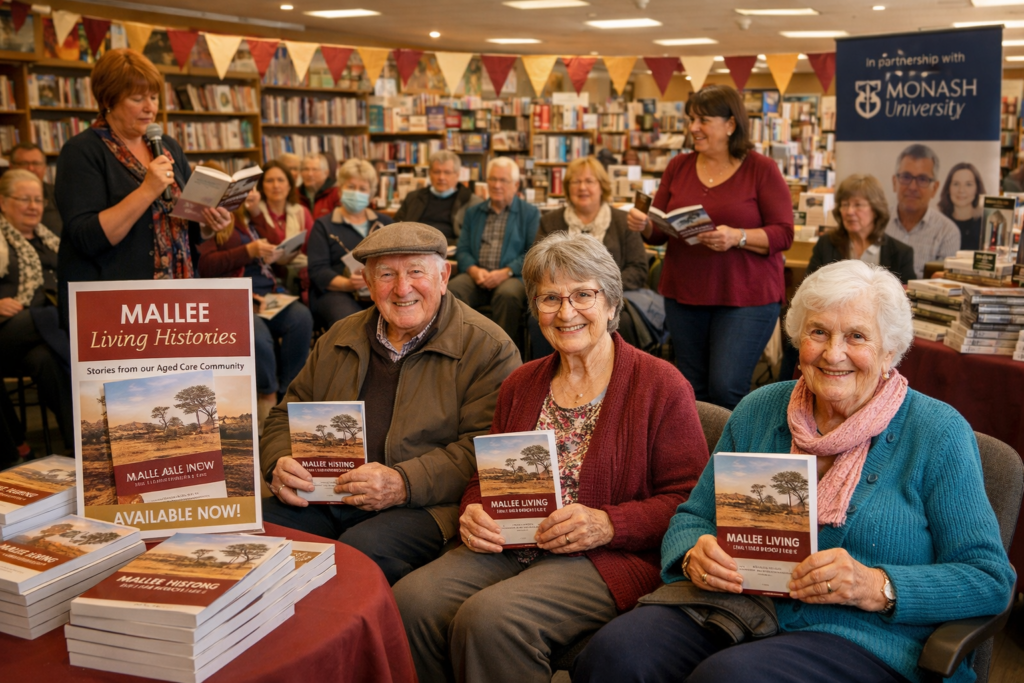
While the Mallee Living Histories project achieved remarkable success, any similar initiative will face challenges. Here’s how to anticipate and address common obstacles.
Challenge 1: Cognitive Limitations
The Issue: Some residents may have memory difficulties, dementia, or other cognitive challenges that affect their ability to participate.
Solutions:
- Focus on emotional memories and feelings rather than precise details
- Use photographs and objects as memory prompts
- Include family members who can provide context
- Value the stories that can be shared rather than focusing on limitations
- Consider alternative formats like poetry or shorter vignettes
- Recognize that even fragmented memories have value
Challenge 2: Emotional Difficulty
The Issue: Life stories inevitably include trauma, loss, and painful experiences that may be difficult to revisit.
Solutions:
- Ensure writers have training in trauma-informed interviewing
- Establish clear boundaries about what will and won’t be discussed
- Allow residents to skip topics they’re uncomfortable with
- Have support services available if needed
- Recognize that sharing difficult stories can be therapeutic when done safely
- Let residents control the narrative and depth of sharing
Challenge 3: Limited Resources
The Issue: Storytelling projects require time, money, and expertise that may be scarce.
Solutions:
- Start small with a pilot project involving just a few residents
- Seek grants from arts councils, historical societies, or aged care foundations
- Partner with universities where students can participate for credit
- Use volunteers from writing groups or journalism programs
- Consider digital-only publication to reduce printing costs
- Explore print-on-demand options rather than large print runs
Challenge 4: Family Concerns
The Issue: Family members may worry about privacy, accuracy, or how their relatives are represented.
Solutions:
- Involve families early in the process
- Provide clear information about consent and review processes
- Allow families to review stories before publication
- Address concerns about sensitive family information
- Emphasize the positive aspects of legacy creation
- Respect decisions if families prefer certain stories not be shared
Challenge 5: Maintaining Momentum
The Issue: Long-term projects can lose energy and focus over time.
Solutions:
- Set clear milestones and celebrate progress
- Maintain regular communication among team members
- Share excerpts and updates with the broader community
- Keep residents engaged with their stories throughout the process
- Build in flexibility for delays without abandoning the project
- Remember the “why”—the profound value of preserving these stories
The Third Book and Beyond: Sustaining the Project
Jenny Garonne’s mention that Princes Court is “now looking at publishing a third” book reveals an important truth: successful storytelling projects don’t end with one publication—they create ongoing opportunities for engagement and legacy creation.
Building on Success
The decision to continue with additional volumes suggests several strategic benefits:
For Residents:
- More residents get the opportunity to share their stories
- Creates anticipation and excitement within the facility
- Provides ongoing purpose and meaningful activity
- Demonstrates that the facility values residents’ contributions
For the Community:
- Continued access to local history and personal narratives
- Growing archive of regional heritage
- Ongoing connection between community and aged care facility
- Established expectation of quality and value
For the Facility:
- Positive public relations and community standing
- Enhanced reputation for innovative programming
- Recruitment advantage for prospective residents
- Staff pride and engagement in meaningful work
Variations and Expansions
Future volumes might explore different approaches:
Thematic Focus: Rather than general life stories, subsequent books could focus on:
- Wartime experiences
- Immigration and settlement stories
- Working life and careers
- Love and family relationships
- Childhood memories
- Community events and celebrations
Multimedia Formats: Beyond printed books, the project could expand to:
- Audio recordings and podcasts
- Video interviews and documentaries
- Digital archives accessible online
- Museum exhibitions
- School curriculum materials
- Interactive community events
Broader Participation: The project could include:
- Residents from other facilities
- Community members not in aged care
- Intergenerational collaborations
- Stories from diverse cultural backgrounds
- Comparison of experiences across different eras
Ensuring Long-term Sustainability
For the project to continue successfully, several elements are crucial:
💡 Dedicated Coordination: Someone needs to champion the project and manage logistics
💡 Ongoing Funding: Whether through book sales, grants, or facility budgets
💡 Writer Recruitment: A pipeline of skilled, sensitive interviewers and writers
💡 Community Engagement: Maintaining interest and demand for the publications
💡 Quality Standards: Consistent editorial and production quality across volumes
💡 Resident Participation: Ensuring new residents feel welcome to contribute
The success of the Mildura project provides a strong foundation for sustainability—proven demand, established processes, and community recognition all make continuation more feasible.
Lessons for the Aged Care Sector
The Mallee Living Histories project offers valuable insights for the broader aged care sector in Australia and beyond. As we face an aging population and ongoing discussions about quality of care, projects like this highlight what’s possible when we prioritize resident dignity, engagement, and contribution.
Rethinking Aged Care Programming
Traditional aged care activities often focus on:
- Physical exercise and mobility
- Basic entertainment (bingo, movie screenings)
- Craft activities
- Music and sing-alongs
While these activities have value, the storytelling project demonstrates the potential for more meaningful, intellectually engaging, and legacy-focused programming. Such initiatives:
✅ Treat residents as experts and teachers rather than passive recipients of care
✅ Create tangible products that outlast the activity itself
✅ Connect residents to the broader community in meaningful ways
✅ Provide cognitive stimulation through memory work and narrative organization
✅ Support emotional wellbeing through validation and purpose
Person-Centered Care in Action
The storytelling project exemplifies person-centered care—an approach that recognizes each resident as a unique individual with their own history, preferences, and needs [3]. By focusing on residents’ life stories, the project:
- Acknowledges their full personhood beyond their current care needs
- Honors their experiences and accumulated wisdom
- Provides individualized attention and engagement
- Empowers residents to make choices about what and how to share
- Builds relationships based on genuine interest and respect
This approach contrasts with task-focused care that prioritizes efficiency and standardization over individual connection and meaning.
Addressing Social Isolation
Social isolation and loneliness are significant concerns in aged care, associated with:
- Increased risk of depression and anxiety
- Cognitive decline
- Physical health deterioration
- Reduced quality of life
- Higher mortality rates
The storytelling project combats isolation by:
🤝 Creating one-on-one relationships between residents and writers
🤝 Connecting residents to the broader community through their published stories
🤝 Facilitating intergenerational connections when younger people read the books
🤝 Providing conversation topics and shared experiences among residents
🤝 Involving families in the process of story collection and review
These connections have lasting impact beyond the project timeline, as evidenced by the ongoing community interest in the published books.
Implications for Facility Design and Operations
Successful implementation of projects like this requires:
Physical Spaces: Quiet, comfortable areas for conducting interviews away from common area noise
Staffing: Flexibility to allow residents time for interview sessions and story review
Culture: Organizational values that prioritize meaningful engagement over just meeting basic care needs
Resources: Budget allocation for creative programming beyond minimum requirements
Training: Staff understanding of the project’s value and how to support it
Facilities considering similar initiatives should evaluate whether their current environment and operations can support this type of programming, and what adjustments might be needed.
For more insights into aged care options and considerations, explore this comprehensive guide on retirement communities in Australia.
The Digital Age Meets Oral Tradition: Technology’s Role
While the Mallee Living Histories project resulted in traditional printed books, technology played and continues to play important roles in modern storytelling initiatives.
Recording and Preservation
Digital audio and video recording offers advantages over traditional note-taking:
Accuracy: Captures exact words, tone, and emotion
Efficiency: Allows writers to focus on conversation rather than frantically scribbling notes
Archival value: Creates permanent record beyond the written story
Accessibility: Can be transcribed using speech-to-text software
Multimedia potential: Audio/video can be used in documentaries or online archives
However, technology also presents challenges:
- Some elderly residents may be uncomfortable with recording
- Equipment can be intimidating or distracting
- Technical failures can disrupt sessions
- Privacy and consent become more complex with audio/video
Digital Publication and Distribution
Beyond or instead of printed books, digital formats offer:
Wider reach: Online accessibility to global audiences, not just local community
Lower costs: No printing expenses, making projects more financially feasible
Multimedia integration: Can include photos, audio clips, video, and interactive elements
Searchability: Digital archives can be searched by keywords, names, or topics
Preservation: Digital files can be backed up and preserved indefinitely
Updates: Easy to add new stories or correct errors
However, digital-only publication may exclude:
- Elderly residents who prefer physical books
- Community members with limited internet access
- The tangible satisfaction of holding a published book
- The ceremonial aspect of a book launch event
The ideal approach may be hybrid publication—printed books for those who want them, with digital versions available for broader access and preservation.
Social Media and Community Engagement
Social media platforms can amplify storytelling projects through:
- Sharing excerpts and quotes to generate interest
- Behind-the-scenes glimpses of the interview process
- Countdown to book launch events
- Reader reactions and reviews
- Connecting with other similar projects
- Fundraising and crowdfunding campaigns
However, social media use requires careful consideration of:
- Resident privacy and consent for online sharing
- Appropriate platforms for the target audience
- Time and expertise needed to manage accounts effectively
- Potential for negative comments or misuse of content
Conclusion: Every Story Matters
As I reflect on the Mallee Living Histories project and what it represents, I’m struck by a simple but profound truth: every person has a story worth preserving, and aged care residents are storytellers whose voices deserve to be heard.
The success of this Mildura initiative—with its multiple reprints and plans for a third volume—demonstrates that communities hunger for these authentic, personal narratives. We’re tired of generic history that focuses only on famous people and major events. We want to understand how ordinary people lived, loved, struggled, and persevered through the decades that shaped our communities.
When aged care residents are storytellers in local projects like this one, everyone benefits:
🌟 Residents gain purpose, validation, and the satisfaction of leaving a lasting legacy
🌟 Families receive precious records of their loved ones’ voices and experiences
🌟 Communities preserve local history and strengthen collective identity
🌟 Future generations inherit a rich tapestry of personal narratives that bring history to life
🌟 Aged care facilities demonstrate commitment to person-centered care and meaningful engagement
The Mallee Living Histories project proves that such initiatives are feasible, valuable, and deeply appreciated. The model is replicable—other communities, facilities, and organizations can adapt the approach to their own contexts and resources.
Your Next Steps: Taking Action
If you’re inspired by this story and want to see similar projects in your community, here’s what you can do:
1. Share the Story: Talk about the Mallee Living Histories project with friends, family, and community members. Awareness is the first step toward action.
2. Connect with Local Aged Care Facilities: Reach out to facilities in your area to gauge interest in storytelling projects. Share the Mildura example as inspiration.
3. Identify Potential Partners: Look for local writers’ groups, historical societies, universities, or libraries that might collaborate.
4. Start Small: Don’t feel you need to create a 400-page anthology immediately. Begin with one or two residents and see where it leads.
5. Seek Funding: Research grants available for arts projects, aged care innovation, or community history preservation.
6. Volunteer Your Skills: If you have writing, interviewing, editing, or publishing skills, offer them to support a project.
7. Support Existing Projects: Buy books from storytelling initiatives, attend launch events, and spread the word about their value.
8. Advocate for Change: Encourage aged care facilities to prioritize meaningful engagement programs that honor residents’ dignity and contributions.
For those interested in learning more about retirement and aged care topics, visit Daily Beacon for comprehensive resources and guides.
A Final Thought
Jenny Garonne and the team at Princes Court, along with their partners at Monash University and the local writers who dedicated themselves to this project, have created something truly special. They’ve shown us that aged care can be about more than just meeting physical needs—it can be about celebrating lives, preserving wisdom, and honoring the storytellers who’ve witnessed decades of history.
As we look toward the future of aged care in Australia and beyond, let’s remember the lesson of Mildura: our elderly residents have stories that matter, voices that deserve to be heard, and legacies that should be preserved. When we create opportunities for them to share their narratives, we enrich not just their lives, but our entire communities.
The third volume of Mallee Living Histories is on the horizon, and I, for one, can’t wait to read it. More importantly, I hope it inspires countless other communities to embark on their own storytelling journeys—because every story matters, and every storyteller deserves to be heard. 📖❤️
References
[1] Woods, B., O’Philbin, L., Farrell, E. M., Spector, A. E., & Orrell, M. (2018). Reminiscence therapy for dementia. Cochrane Database of Systematic Reviews.
[2] Australian Human Rights Commission. (2021). “What’s Age Got to Do with It? A Snapshot of Ageism Across the Australian Lifespan.”
[3] Aged Care Quality and Safety Commission. (2019). “Person-centred care in aged care.” Australian Government guidance document.