
Roughly one in three adults over the age of 60 deals with chronic constipation — making it one of the most common, yet least talked-about, health challenges in older age. If you’ve watched a parent or grandparent struggle with this uncomfortable issue, or if you’re navigating it yourself, you already know how much it affects daily quality of life. The good news? The right plate of food can make a genuine difference. Understanding which high fiber foods for constipation elderly individuals need most is one of the most powerful — and affordable — steps toward relief.

Key Takeaways
- Adults over 51 should aim for 22–34 grams of fiber per day, but most fall well short of this target [1]
- Fruits, vegetables, legumes, and whole grains are the best natural sources of dietary fiber for seniors
- Prunes are a standout food for constipation relief, thanks to both fiber and natural sorbitol content [4]
- Always increase fiber intake gradually and pair it with plenty of water to avoid bloating [2]
- Physical activity and proper nutrition work together — fiber alone isn’t the whole picture [4]
Why Constipation Gets Worse With Age
Getting older brings wisdom, perspective, and — unfortunately — a slower digestive system. Several factors combine to make constipation more common in seniors:
- Reduced gut motility: The muscles in the digestive tract naturally weaken over time
- Less physical activity: Movement stimulates digestion, and many seniors move less
- Medications: Common drugs like pain relievers, antidepressants, and iron supplements can cause constipation
- Dehydration: Older adults often feel less thirsty, leading to lower fluid intake
- Low fiber diets: Softer, more processed foods are easier to chew but strip out essential fiber
My grandmother used to joke that her biggest daily challenge wasn’t her crossword puzzle — it was her morning bathroom visit. She wasn’t alone. Understanding the root causes helps us see why focusing on high fiber foods for constipation in elderly adults is such a targeted, effective approach.
💡 Pull Quote: “Fiber works like a sponge in your gut — it absorbs water, adds bulk to stool, and keeps things moving at a healthy pace.”
How Much Fiber Do Seniors Actually Need?
According to the National Institute of Diabetes and Digestive and Kidney Diseases, adults aged 51 and older should aim for 22–34 grams of fiber per day, depending on age and sex [1]. Most seniors consume less than half that amount.
Here’s a quick breakdown:
| Age Group | Women | Men |
|---|---|---|
| 51–70 years | 22g/day | 28g/day |
| 71+ years | 21g/day | 30g/day |
The gap between what seniors eat and what they need is significant. Bridging that gap with the right foods — rather than relying solely on laxatives — is both safer and more sustainable long-term.
If you’re working with an older family member on their diet, it may also be worth consulting a specialist. Our guide on what a geriatric nutritionist does and why elderly individuals need one is a great starting point.
The Best High Fiber Foods for Constipation in Elderly Adults
Let’s get into the practical stuff — the actual foods that deliver the most fiber and the most relief.
🍇 Fruits That Pack a Fiber Punch
Fruit is one of the easiest ways to add fiber to a senior’s diet because it’s naturally sweet, easy to eat, and requires minimal preparation.
Top fiber-rich fruits:
- 🫐 Raspberries — 8g of fiber per cup (one of the highest of any fruit) [2]
- 🍐 Pear with skin — 5.5g per medium fruit [2]
- 🍎 Apple with skin — 4.5g per medium fruit [2]
- 🍑 Prunes — 3g per serving, plus natural sorbitol which acts as a gentle laxative [4]
- 🍌 Banana — 3g per medium fruit, plus potassium for muscle function
Prunes deserve special mention. Hopkins Medicine highlights that prunes contain both fiber and sorbitol — a naturally occurring sugar alcohol that draws water into the intestines and softens stool [4]. Just 4–6 prunes a day can make a noticeable difference within a few days.
🥦 Vegetables That Keep Things Moving
Vegetables are fiber powerhouses, and the good news is that cooked vegetables are just as effective as raw ones — making them easier for seniors with dental issues or sensitive stomachs.
Best vegetables for fiber:
| Vegetable | Fiber Content |
|---|---|
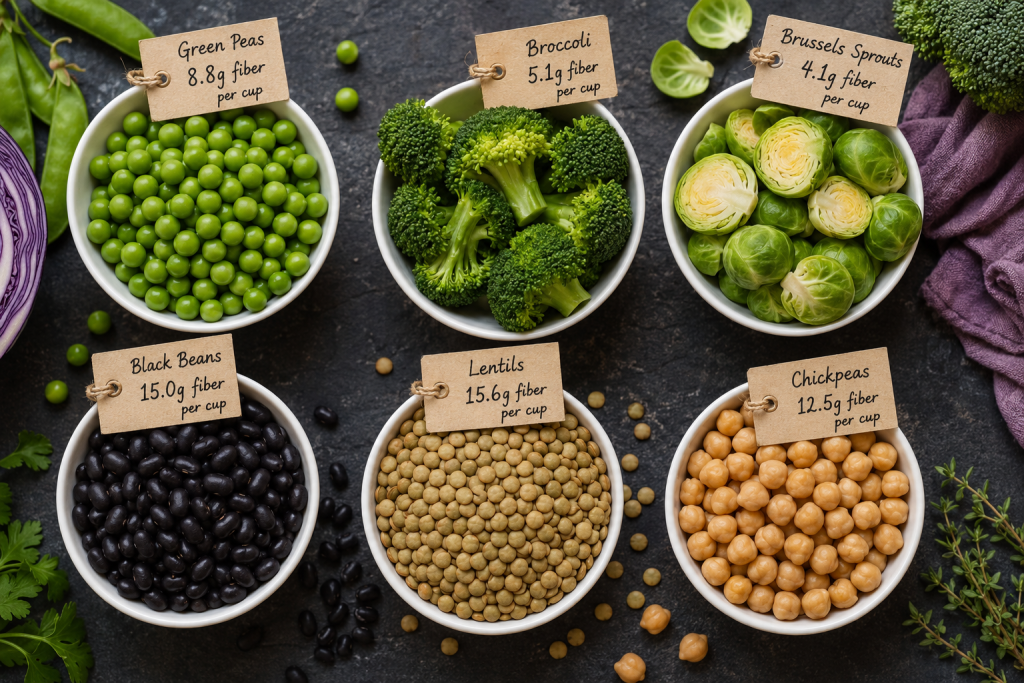
| Green peas (1 cup) | 9g |
| Broccoli (1 cup) | 5g |
| Brussels sprouts (1 cup) | 4.5g |
| Carrots (1 cup) | 3.6g |
| Sweet potato (1 medium) | 3.8g |
[2]
Steaming or roasting these vegetables preserves most of their fiber content while making them easier to chew and digest — a win for seniors with dental concerns.
🌾 Whole Grains: The Everyday Fiber Boost
Whole grains are easy to incorporate into daily meals and provide consistent, reliable fiber. Switching from white bread to whole wheat, or from instant oats to rolled oats, can add several grams of fiber per day without any dramatic dietary changes [3].
Smart whole grain swaps:
- White rice → Brown rice (adds ~2g fiber per cup)
- White bread → Whole wheat bread (adds ~2g fiber per slice)
- Instant oatmeal → Rolled oats (adds ~4g fiber per cup)
- Regular pasta → Whole wheat pasta (adds ~3g fiber per cup)
Oatmeal is particularly popular among seniors because it’s warm, easy to digest, and can be flavored with fruit for an extra fiber boost.
🫘 Legumes: The Unsung Heroes of Digestive Health
If there’s one food group that’s consistently underrated for digestive health, it’s legumes. Lentils, black beans, chickpeas, and kidney beans are among the most fiber-dense foods available — and they’re affordable and versatile [1].
Legume fiber content:
- Lentils (1 cup cooked): ~15g fiber
- Black beans (1 cup cooked): ~15g fiber
- Chickpeas (1 cup cooked): ~12g fiber
- Kidney beans (1 cup cooked): ~13g fiber
Adding half a cup of lentils to a soup or a handful of chickpeas to a salad can dramatically increase daily fiber intake without feeling like a chore.
For seniors who struggle with appetite or have difficulty eating large meals, nutrition drinks for elderly can sometimes complement a fiber-rich diet — though whole foods should always come first.
The Fiber-Water Connection: Don’t Skip This Step
Here’s something many people miss: fiber without water can actually make constipation worse. Fiber works by absorbing water in the digestive tract to create soft, bulky stools. Without adequate fluid intake, fiber can become dry and compacted — the opposite of what you want [1].
Daily fluid recommendations for seniors:
- Aim for 6–8 cups (1.5–2 litres) of water per day
- Herbal teas, broth, and water-rich fruits (like watermelon) all count
- Limit caffeine and alcohol, which can dehydrate
💡 Pro Tip: A simple habit — drinking a glass of warm water first thing in the morning — can stimulate the digestive system and make a noticeable difference.
How to Introduce High Fiber Foods for Constipation in Elderly Individuals Safely
One of the most common mistakes people make is dramatically increasing fiber intake all at once. This can cause bloating, gas, and cramping — which can be especially uncomfortable for older adults [2].
The gradual approach:
- Week 1–2: Add one high-fiber food per day (e.g., a pear with lunch)
- Week 3–4: Add a second serving (e.g., lentil soup for dinner)
- Week 5+: Build toward the daily target of 22–34g, adjusting as needed
This slow ramp-up gives the gut microbiome time to adjust and minimizes discomfort.
Foods to Limit When Managing Constipation
While adding fiber-rich foods is the priority, it’s equally important to reduce foods that slow digestion down [4]:
- 🚫 Processed meats (hot dogs, deli meats)
- 🚫 Fried and high-fat foods
- 🚫 White bread, white rice, and refined grains
- 🚫 Dairy in excess (cheese and milk can slow digestion for some people)
- 🚫 Chips, crackers, and packaged snacks
These foods tend to be low in fiber and high in ingredients that slow gut motility. Reducing them — even partially — can complement a high-fiber eating plan.
The Role of Physical Activity in Digestive Health
Diet is crucial, but it works best alongside movement. Regular physical activity stimulates the muscles of the intestinal wall, helping move waste through the digestive system more efficiently [4].
For seniors, this doesn’t mean intense workouts. Even gentle activities make a real difference:
- A 20-minute walk after meals
- Light stretching or yoga
- Swimming or water aerobics
- Chair exercises for those with mobility limitations
If you’re looking for inspiration, the story of cycling programs bringing freedom to Gold Coast seniors is a wonderful example of how movement can transform quality of life in older age.
Practical Meal Ideas for a High-Fiber Day
Here’s what a fiber-rich day might look like for an older adult:
🌅 Breakfast:
Rolled oats topped with raspberries and a sliced banana
Fiber: ~12g
☀️ Lunch:
Whole wheat bread sandwich with avocado, tomato, and spinach + an apple with skin
Fiber: ~10g
🌙 Dinner:
Lentil and vegetable soup with a side of steamed broccoli
Fiber: ~14g
🍎 Snacks:
A small handful of prunes or a pear
Fiber: ~5g
Daily Total: ~41g — comfortably above the recommended range, with room to adjust based on tolerance.
For seniors who may also benefit from additional protein alongside their fiber intake, our article on whether protein supplements for elderly patients are important offers useful context.
When to See a Doctor
While dietary changes can resolve most cases of constipation, some situations require medical attention. Speak with a healthcare professional if:
- Constipation has lasted more than 3 weeks despite dietary changes
- There is blood in the stool
- There is unexplained weight loss
- Constipation is accompanied by severe abdominal pain
- Over-the-counter laxatives are being used daily
A doctor can rule out underlying conditions like hypothyroidism, bowel obstruction, or medication side effects that may be contributing to the problem.
Interactive Tool: Daily Fiber Tracker for Seniors
Senior Fiber Intake Tracker
Enter servings consumed today to estimate your fiber intake.
Conclusion
Constipation in older adults is common, but it’s far from inevitable. By consistently incorporating the right high fiber foods for constipation elderly individuals need — fruits like raspberries and prunes, vegetables like broccoli and green peas, legumes like lentils and black beans, and whole grains like oats and brown rice — it’s entirely possible to restore comfortable, regular digestion.
Here are your actionable next steps:
- ✅ Audit today’s meals — how close are you (or your loved one) to 22–34g of fiber?
- ✅ Add one new high-fiber food this week — start with prunes or oatmeal for quick wins
- ✅ Increase water intake — aim for 6–8 cups per day alongside any fiber increase
- ✅ Move more — even a short daily walk supports healthy digestion
- ✅ Go slow — increase fiber gradually over 4–6 weeks to avoid discomfort
- ✅ See a doctor if symptoms persist or worsen despite dietary changes
For broader guidance on senior nutrition and healthy aging, explore more resources on the Daily Beacon blog — there’s plenty of practical advice to help older Australians live their best lives.
References
[1] Eating Diet Nutrition – https://www.niddk.nih.gov/health-information/digestive-diseases/constipation/eating-diet-nutrition?utm_source=openai
[2] Art 20050948 – https://www.mayoclinic.org/healthy-lifestyle/nutrition-and-healthy-eating/in-depth/high-fiber-foods/art-20050948?utm_source=openai
[3] High Fiber Foods Seniors Top Constipation 59 Daily21e5 – https://ubiehealth.com/doctors-note/high-fiber-foods-seniors-top-constipation-59-daily21e5?utm_source=openai
[4] Foods For Constipation – https://www.hopkinsmedicine.org/health/wellness-and-prevention/foods-for-constipation?utm_source=openai