
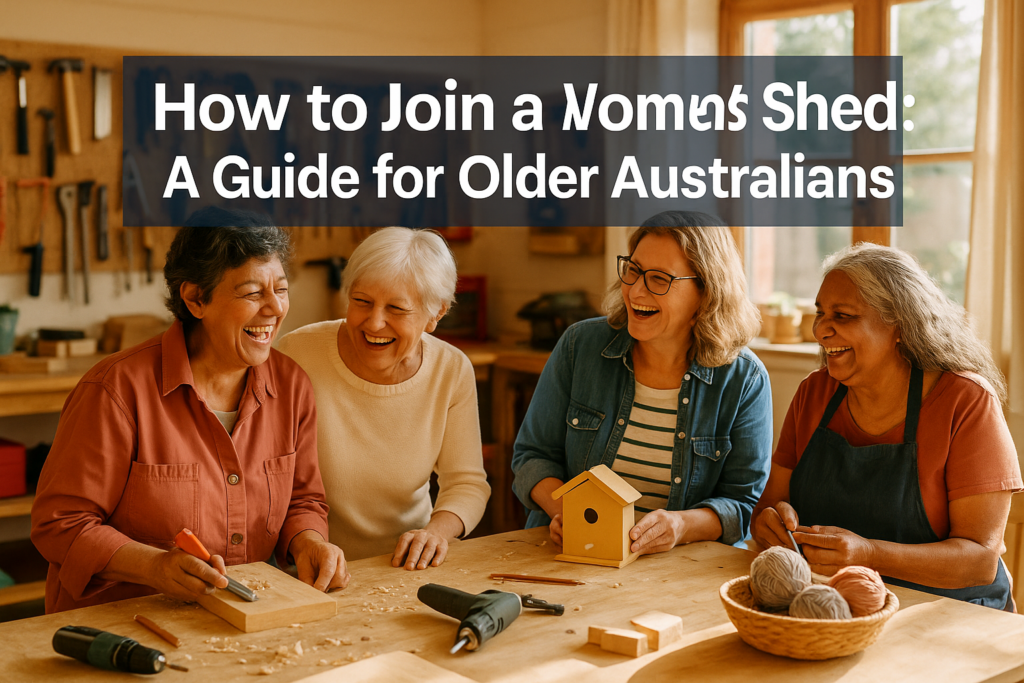
When Margaret walked through the doors of her local women’s shed for the first time at age 67, she had no idea it would completely transform her retirement. After losing her husband and feeling increasingly isolated, she’d been searching for women’s shed locations near me online, hoping to find something—anything—to fill the long, lonely days. What she discovered was far more than a hobby space. She found friendship, purpose, and a community of women who understood exactly what she was going through.
If you’re an older Australian woman looking for connection, creativity, and a sense of belonging, joining a women’s shed might be one of the best decisions you’ll make. In this comprehensive guide, I’ll walk you through everything you need to know about finding and joining a women’s shed in your area, what to expect, and how to make the most of this wonderful community resource.
Key Takeaways
- 🏠 Women’s sheds are community spaces where older Australian women gather for social connection, skill-building, and creative activities
- 🔍 Finding women’s shed locations near me is easy using the Australian Women’s Shed Association directory and local council resources
- 💰 Membership costs are typically affordable ($20-$100 annually) with many sheds offering financial assistance
- 🤝 No experience required—women’s sheds welcome all skill levels and focus on learning together
- 📅 Getting started is simple: contact your local shed, attend an open day, and complete a basic membership form
What Exactly Is a Women’s Shed?
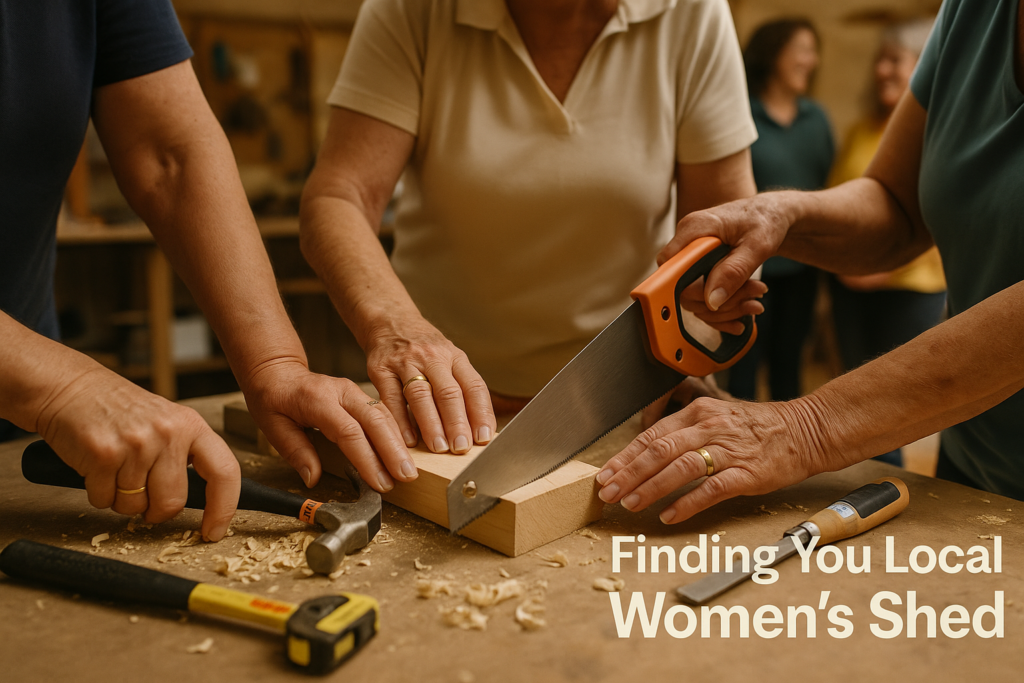
Before we dive into how to find women’s shed locations near me, let’s talk about what these amazing spaces actually are.
Women’s sheds are community-based organizations that provide a safe, welcoming space for women to gather, learn new skills, work on projects, and most importantly, connect with other women. They’re inspired by the highly successful Men’s Shed movement but designed specifically to meet the needs and interests of women [1].
The Difference Between Men’s Sheds and Women’s Sheds
While men’s sheds often focus heavily on woodworking and traditional “shed” activities, women’s sheds tend to offer a broader range of activities including:
- 🪡 Sewing, quilting, and textile crafts
- 🎨 Painting and art classes
- 🔨 Woodworking and furniture restoration
- 🌱 Gardening and sustainable living projects
- 💻 Technology and computer skills
- 🍰 Cooking and food preservation
- 📚 Book clubs and discussion groups
- ☕ Social morning teas and community events
The key difference? Women’s sheds emphasize social connection and conversation alongside hands-on activities. There’s always time for a cuppa and a chat!
Why Women’s Sheds Matter in 2025
Australia is facing a loneliness epidemic, particularly among older women. Research shows that social isolation affects nearly one in four older Australians, with women living longer and more likely to live alone in their later years [2].
Women’s sheds address this crisis head-on by creating spaces where women can:
- Combat isolation and build meaningful friendships
- Learn new skills and maintain cognitive health
- Share knowledge and life experiences with others
- Contribute to their community through group projects
- Maintain independence and confidence as they age
Finding Women’s Shed Locations Near Me: Your Step-by-Step Search Guide
Now that you understand what women’s sheds offer, let’s find one in your area! Here’s exactly how to search for women’s shed locations near me.
Step 1: Check the Australian Women’s Shed Association Directory
The Australian Women’s Shed Association (AWSA) maintains the most comprehensive directory of women’s sheds across the country. Here’s how to use it:
- Visit the AWSA website at awsa.org.au
- Click on “Find a Shed” in the main navigation
- Enter your suburb, postcode, or town name
- Browse the results showing sheds in your area
- Click on individual listings for contact details and opening hours
Pro tip: If there’s no shed listed in your immediate area, check neighboring suburbs. Many members travel 15-20 minutes to attend their shed!
Step 2: Contact Your Local Council
Your local council is another excellent resource for finding women’s shed locations near me. Most councils actively support community groups and can provide:
- 📋 Lists of registered community organizations
- 📞 Direct contact information for local sheds
- 📰 Community newsletters featuring shed activities
- 🏢 Information about council-run community centers that host women’s groups
Call your council’s community services department or visit their website’s “Community Groups” section.
Step 3: Search Social Media and Community Boards
Many women’s sheds maintain active Facebook pages and Instagram accounts. Try searching:
- “[Your town name] women’s shed”
- “Women’s shed [your region]”
- “Ladies shed [your suburb]”
Also check:
- Community noticeboards at libraries
- Local newspaper community event listings
- Bulletin boards at community centers and senior centers
- Local Facebook community groups
Step 4: Ask at Neighborhood Houses and Community Centers
Neighborhood houses and community centers often know about all the groups operating in your area. Pop in and ask the staff—they’re usually incredibly helpful and might even know members personally who can introduce you!
Understanding Women’s Shed Membership: Costs, Commitment, and What to Expect
Once you’ve found potential women’s shed locations near me, you’ll want to understand what membership involves.
Typical Membership Costs
Women’s sheds are designed to be affordable and accessible. Here’s what you can generally expect:
| Fee Type | Typical Cost | What It Covers |
|---|---|---|
| Annual Membership | $20 – $100 | Insurance, facility costs, basic materials |
| Session Fees | $2 – $5 per visit | Tea, coffee, and light refreshments |
| Workshop Materials | Variable | Special project materials (often optional) |
| Social Events | $5 – $20 | Special lunches, outings, or celebrations |
Important: Most sheds offer concession rates for pension card holders and will never turn anyone away due to financial hardship. If cost is a concern, speak confidentially with the coordinator—they’ll work something out.
Time Commitment and Flexibility
One of the beautiful things about women’s sheds is their flexibility. There’s no pressure to attend every session or commit to a rigid schedule.
Typical operating hours:
- 2-3 days per week
- Usually 9:30 AM – 2:30 PM
- Some offer evening sessions for working women
Your commitment:
- Come as often or as little as you like
- No minimum attendance requirements
- Drop in when it suits your schedule
- Take breaks when needed (holidays, health issues, family commitments)
What You’ll Need to Provide
When you join, most sheds will ask for:
✅ A completed membership form (basic contact information)
✅ Emergency contact details
✅ Any relevant health information (allergies, mobility needs)
✅ Membership fee payment
✅ Signed safety and privacy agreements
You typically don’t need to bring:
- Tools or equipment (sheds provide these)
- Special skills or experience
- Your own materials (unless working on a personal project)
Your First Visit: What to Expect When You Walk Through the Door
I remember when I helped my neighbor Susan attend her first women’s shed visit. She was so nervous! “What if I don’t fit in?” she worried. “What if everyone already knows each other?”
Let me walk you through what typically happens on your first visit to ease any concerns.
Before You Go
Call ahead or email the shed coordinator to let them know you’re coming. This isn’t mandatory, but it helps because:
- Someone can specifically welcome you
- They can answer any questions beforehand
- They’ll make sure there’s space for you
- You’ll know if there are any special events that day
What to wear:
- Comfortable, casual clothing
- Closed-toe shoes (for safety, especially in workshop areas)
- Layers (community spaces can vary in temperature)
- Nothing too precious (you might get paint, glue, or sawdust on you!)
Walking In: The Welcome Process
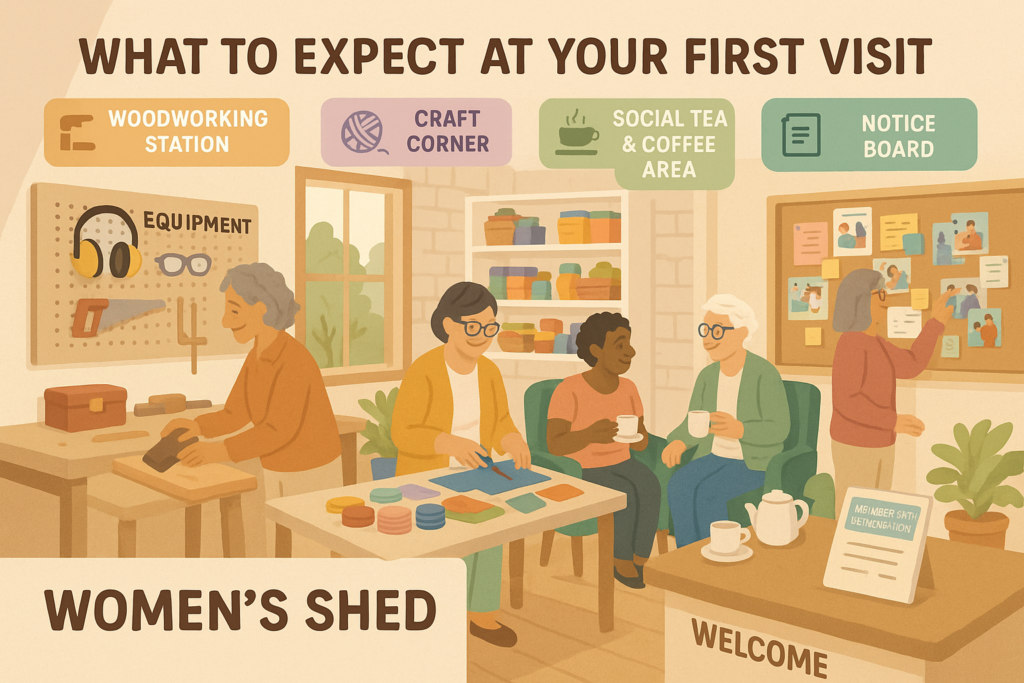
Most women’s sheds have a designated welcomer or coordinator who greets new visitors. Here’s the typical process:
- Warm greeting at the door—expect a genuine smile and introduction
- Quick tour of the facilities (workshop areas, kitchen, bathrooms, garden)
- Introduction to members who are there that day
- Explanation of activities happening during that session
- Morning tea invitation—this is where the magic happens!
“The first time I walked into the shed, three women immediately invited me to sit with them for tea. Within five minutes, I felt like I’d known them for years. That’s the women’s shed way.” — Patricia, 71, Bendigo Women’s Shed member
Your First Activity
You won’t be pressured to jump into any activity immediately. Most sheds encourage new members to:
- Observe what others are doing
- Chat over morning tea and get to know people
- Try something simple if you feel comfortable
- Ask questions about different activities available
Common first-time activities include:
- Joining a craft circle (knitting, crochet, embroidery)
- Helping with a group project
- Learning a basic woodworking technique
- Participating in a gardening task
- Simply enjoying conversation over tea!
Building Connections
The social aspect is just as important as the activities. Don’t be surprised if:
- Women share personal stories quickly (there’s something about working with your hands that opens up conversation)
- You’re invited to upcoming events or outings
- Members exchange phone numbers
- Someone offers to pick you up for the next session
This genuine warmth and inclusion is what makes women’s sheds special. Unlike some social groups where cliques form, women’s sheds actively cultivate a culture of welcome and belonging.
Activities and Opportunities at Women’s Sheds
Once you’ve found women’s shed locations near me and joined, you’ll discover an incredible variety of activities. Let me share what’s typically available.
Creative and Craft Activities
Textile Arts:
- Quilting and patchwork
- Sewing and alterations
- Knitting and crochet
- Weaving and macramé
- Embroidery and cross-stitch
- Upcycling clothing and fabrics
Visual Arts:
- Painting (acrylics, watercolors, oils)
- Drawing and sketching
- Pottery and ceramics
- Jewelry making
- Card making and scrapbooking
- Mixed media art
Practical Skills and Workshops
Woodworking and Building:
- Furniture making and restoration
- Basic carpentry skills
- Toy making for charity
- Garden furniture construction
- Picture framing
- Tool safety and maintenance
Technology and Digital Skills:
- Computer basics
- Smartphone and tablet tutorials
- Social media for staying connected
- Online safety
- Digital photography
- Video calling with family
Life Skills:
- Basic home maintenance
- Financial literacy workshops
- Health and wellness sessions
- Cooking and meal preparation
- Gardening and food growing
- Sustainable living practices
Community Projects and Social Impact
Many women’s sheds engage in meaningful community work, which adds purpose and fulfillment:
- 🧸 Making toys for children’s hospitals
- 🧶 Knitting blankets for homeless shelters
- 🎒 Preparing school supplies for disadvantaged families
- 🌳 Community garden projects
- ♻️ Environmental initiatives
- 🎁 Crafting items for fundraising
“We made 200 baby beanies for the neonatal unit last year. Knowing our work helps tiny babies and worried parents gives me such a sense of purpose.” — Helen, 69, Hobart Women’s Shed
Social Events and Outings
Beyond regular shed activities, most groups organize:
- Monthly lunches at local cafes or restaurants
- Bus trips to galleries, gardens, or regional attractions
- Celebration events (birthdays, holidays, milestones)
- Guest speaker sessions
- Skill-sharing workshops
- End-of-year celebrations
Special Considerations for Older Australians
As we age, we have unique needs and considerations. Good women’s sheds understand this and make accommodations.
Accessibility Features
When evaluating women’s shed locations near me, check for:
✅ Physical accessibility:
- Wheelchair ramps and wide doorways
- Accessible toilets
- Parking close to entrance
- Level floors or lifts
- Adequate seating with back support
✅ Sensory considerations:
- Good lighting (important for detailed work)
- Hearing loop systems for those with hearing aids
- Clear signage
- Quiet spaces available
✅ Safety features:
- First aid trained members
- Emergency procedures
- Tool safety training
- Non-slip flooring
- Adequate ventilation
Health and Wellbeing Support
Many women’s sheds partner with health services to provide:
- Blood pressure checks
- Health information sessions
- Mental health support connections
- Exercise and movement classes
- Nutrition workshops
- Dementia-friendly activities
Transport Assistance
Can’t drive or don’t have a car? Many sheds offer solutions:
- Member carpooling arrangements
- Community transport service coordination
- Volunteer driver programs
- Location on public transport routes
- Walking groups for nearby members
Don’t let transport be a barrier—ask about options when you contact the shed!
Starting Your Own Women’s Shed
What if you’ve searched for women’s shed locations near me and come up empty? Consider starting your own!
Is There Demand in Your Area?
Before you begin, gauge interest by:
- Talking to friends and neighbors
- Posting in local community Facebook groups
- Contacting your council about interest
- Visiting local senior centers to chat with potential members
- Conducting a simple survey
If you find 10-15 interested women, you have enough to start!
Steps to Establish a Women’s Shed
Step 1: Form a Steering Committee
Gather 4-6 enthusiastic women to share the workload.
Step 2: Find a Space
Potential venues include:
- Community centers
- Neighborhood houses
- Church halls
- Council-owned buildings
- School facilities (outside school hours)
- Empty shops or warehouses
Step 3: Secure Funding
Apply for:
- Local council community grants
- State government community funding
- Service club donations (Lions, Rotary)
- Crowdfunding campaigns
- Corporate sponsorships
Step 4: Get Support from AWSA
The Australian Women’s Shed Association provides:
- Start-up guides and templates
- Insurance options
- Mentoring from established sheds
- Networking opportunities
- Governance advice
Step 5: Spread the Word
Promote your new shed through:
- Local newspapers
- Community radio
- Council newsletters
- Library noticeboards
- Social media
- Word of mouth
Expected Timeline
From concept to opening day typically takes 6-12 months, depending on:
- Venue availability
- Funding success
- Volunteer capacity
- Council approval processes
Real Stories: How Women’s Sheds Changed Lives
Let me share some inspiring stories from women who found their local sheds.
Dorothy’s Story: From Isolation to Inspiration
Dorothy, 74, from regional Victoria, spent two years barely leaving her house after her husband passed away. Her adult children lived interstate, and she’d lost touch with many friends.
“I saw a tiny notice about a women’s shed starting up in the library,” she recalls. “I almost didn’t go—I’d become so used to being alone. But something made me walk through that door.”
Three years later, Dorothy is now the shed’s treasurer, has learned woodworking, and has a circle of close friends. “I honestly don’t know where I’d be without my shed family,” she says. “They saved my life.”
Linda and Grace: Bridging Generations
Linda, 68, and Grace, 52, met at their local women’s shed and discovered they lived on the same street. Despite the age gap, they bonded over a shared love of quilting.
“Grace taught me how to use Instagram to share photos of my quilts,” Linda laughs. “And I taught her my grandmother’s traditional quilting patterns. We learn from each other.”
They now collaborate on quilts that blend traditional and modern techniques, selling them to raise funds for the shed.
The Refugee Welcome Project
One women’s shed in Western Sydney created a special program to welcome refugee women to their community. They paired established members with newly arrived women, teaching English through craft activities and building bridges across cultures.
“We all speak the universal language of creativity,” says coordinator Maria. “Watching these friendships form across language barriers is incredibly moving.”
Frequently Asked Questions About Joining a Women’s Shed
Do I need to have skills or experience?
Absolutely not! Women’s sheds welcome complete beginners. The whole point is learning together. Many members had never picked up a power tool, paintbrush, or knitting needle before joining.
What if I’m still working part-time?
Many sheds now offer flexible hours including evening or weekend sessions specifically for women who work. Check when searching for women’s shed locations near me.
Can I bring a friend?
Yes! Most sheds encourage members to bring friends. It can make that first visit less daunting.
What if I have mobility issues or use a wheelchair?
Contact the shed beforehand to discuss accessibility. Most sheds are committed to inclusion and will make accommodations.
Are women’s sheds only for seniors?
While many members are older, most sheds welcome women of all ages. Some specifically aim for intergenerational membership to facilitate knowledge sharing.
What if I just want to socialize, not do activities?
That’s perfectly fine! Many members come primarily for the social connection. You can sit and chat over tea without participating in hands-on activities.
Can I work on my own projects?
Absolutely! While group projects are common, you’re welcome to bring your own projects and work on them in the supportive environment.
What happens if I join and it’s not for me?
There’s no long-term obligation. If a particular shed doesn’t feel right, you can try another one. Different sheds have different personalities—finding the right fit is important.
Making the Most of Your Women’s Shed Membership
Once you’ve joined, here are my tips for getting the full benefit:
Be Open to New Experiences
Say yes to trying activities outside your comfort zone. You might discover hidden talents!
Contribute Your Own Skills
Everyone has something to offer. Whether it’s:
- Teaching a skill you know
- Helping with administration
- Organizing social events
- Mentoring new members
- Sharing your life experience
Your contributions matter.
Build Genuine Friendships
Don’t just attend—invest in relationships. Exchange phone numbers, meet for coffee outside shed hours, support each other through life’s challenges.
Take on a Role
When you’re ready, consider joining the committee or taking on a small responsibility. This deepens your connection and sense of ownership.
Bring Ideas
Women’s sheds thrive on member input. Suggest:
- New activities or workshops
- Guest speakers
- Outing destinations
- Community projects
- Fundraising ideas
Practice Self-Care
While the shed is wonderful, maintain balance. Don’t overcommit. It’s okay to miss sessions when you need rest or have other commitments.
The Health Benefits of Women’s Shed Participation
Research increasingly shows that women’s shed membership provides significant health benefits [3]:
Mental Health Benefits
- 🧠 Reduced depression and anxiety through social connection
- 🎯 Increased sense of purpose through meaningful activities
- 💪 Improved self-esteem from learning new skills
- 😊 Enhanced mood through regular social interaction
- 🧘 Stress reduction through creative activities
Cognitive Benefits
- 🎨 Maintained cognitive function through learning and problem-solving
- 🧩 Improved memory through regular mental stimulation
- 🔄 Neuroplasticity encouraged through new skill development
- 📚 Reduced dementia risk associated with social engagement
Physical Health Benefits
- 🚶 Increased physical activity (getting out of the house regularly)
- 🤲 Improved fine motor skills through craft and tool use
- 💤 Better sleep from physical and mental activity
- ❤️ Cardiovascular benefits from reduced social isolation
- 🍎 Healthier lifestyle choices influenced by peer support
Social Health Benefits
- 👭 Expanded social networks and friendship circles
- 🤗 Reduced loneliness through regular meaningful contact
- 🏘️ Stronger community connections and sense of belonging
- 👨👩👧👦 Intergenerational relationships in mixed-age sheds
- 🎉 Increased social confidence and communication skills
Resources and Support Organizations
As you search for women’s shed locations near me and begin your journey, these organizations can help:
National Organizations
Australian Women’s Shed Association (AWSA)
- Website: awsa.org.au
- Email: info@awsa.org.au
- Services: Shed directory, start-up support, insurance, resources
Australian Men’s Shed Association (AMSA)
- Website: mensshed.org
- While focused on men’s sheds, they can often direct you to women’s sheds
State-Based Support
Each state has community development organizations that support women’s sheds:
- NSW: Community Builders NSW
- VIC: Neighbourhood Houses Victoria
- QLD: Queensland Women’s Health Network
- WA: Community Arts Network WA
- SA: Community Centres SA
- TAS: Community Houses Tasmania
Government Resources
Department of Social Services
- Provides funding for community programs
- Website: dss.gov.au
State and Territory Governments
- Community grants programs
- Senior services directories
- Active aging initiatives
Health and Wellbeing Support
Beyond Blue
- Phone: 1300 22 4636
- Website: beyondblue.org.au
- Support for depression and anxiety
Lifeline
- Phone: 13 11 14
- 24/7 crisis support
National Dementia Helpline
- Phone: 1800 100 500
- Support for dementia-related concerns
Conclusion: Your Next Steps to Join a Women’s Shed
Finding and joining a women’s shed could be one of the most positive steps you take for your wellbeing, social connection, and personal growth. Whether you’re dealing with loneliness, looking for purpose, wanting to learn new skills, or simply seeking friendship, women’s sheds offer a welcoming space designed specifically for you.
Your Action Plan
Here’s exactly what to do next:
This Week:
- ✅ Search for women’s shed locations near me using the AWSA directory
- ✅ Contact 2-3 sheds in your area by phone or email
- ✅ Ask about open days or trial visits
- ✅ Mark your calendar for a visit
Your First Visit:
- ✅ Wear comfortable, casual clothing
- ✅ Arrive with an open mind and heart
- ✅ Introduce yourself and share what brings you there
- ✅ Try at least one activity or join in morning tea
- ✅ Exchange contact details with someone you connect with
First Month:
- ✅ Attend at least 3-4 sessions to get a real feel for the shed
- ✅ Try different activities to find what you enjoy
- ✅ Complete your membership paperwork
- ✅ Start building relationships with regular members
- ✅ Consider what you might contribute or share
Remember This
You deserve connection, community, and creativity in your life. Age is not a barrier—it’s an asset. Every woman who walks through a women’s shed door brings valuable life experience, wisdom, and unique perspective.
That first step might feel daunting, but I promise you, the women on the other side of that door are hoping you’ll walk through. They’ve been where you are. They understand the courage it takes to try something new.
Margaret, who I mentioned at the beginning of this article, told me recently: “I wish I’d found my shed years earlier. But I’m grateful for every day I have there now. It’s given me back my joy.”
Your joy is waiting too. Take that first step today.
Share Your Story
Once you’ve joined a women’s shed, consider sharing your experience to encourage other women. Your story might be exactly what someone else needs to hear to take that brave first step.
Women’s sheds thrive on word-of-mouth and personal recommendations. Be the friend who invites someone along. Be the voice that says, “You’re welcome here.”
The women’s shed movement is growing stronger every year, creating communities of connection, creativity, and care across Australia. By joining, you’re not just helping yourself—you’re contributing to a social movement that’s combating loneliness and building stronger communities.
Welcome to the women’s shed family. We’ve been waiting for you. 💕
References
[1] Australian Women’s Shed Association. (2024). “About Women’s Sheds.” Retrieved from awsa.org.au
[2] Australian Institute of Health and Welfare. (2023). “Social Isolation and Loneliness Among Older Australians.” AIHW Report Series.
[3] Relationships Australia. (2024). “The Health Benefits of Community Connection for Older Women.” Research Report.
SEO Meta Information
Meta Title: Women’s Shed Locations Near Me: Join Guide 2025
Meta Description: Find women’s shed locations near me with our complete guide for older Australians. Learn how to join, what to expect, costs, activities & health benefits.