
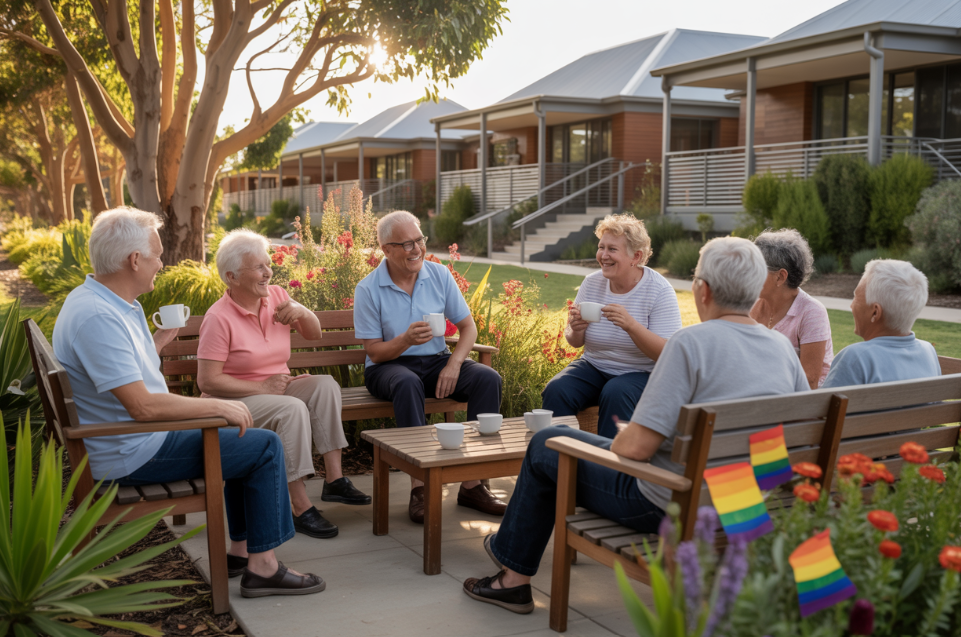
For Australia’s LGBTIQ+ seniors, finding aged care that truly welcomes and affirms their identity has long been a challenge. After decades—sometimes lifetimes—of fighting discrimination, many older LGBTIQ+ Australians face the prospect of re-entering the closet when they need care most. However, the landscape is changing. With Rainbow Tick accreditation, specialised providers, and groundbreaking purpose-built facilities emerging across the country, LGBTIQ+-inclusive aged care is becoming more accessible. This comprehensive guide explores the current state of LGBT retirement communities and aged care options in Australia, offering seniors and their families critical information for making informed, empowering decisions about their care.
Understanding the LGBTIQ+ Aged Care Landscape in Australia
The Demographics and Unique Challenges
According to the Australian Bureau of Statistics, approximately 4.5% of Australians aged 16 years and over identify as LGBTI+, representing more than 910,000 people. However, the LGBTI+ population has a younger age structure, with only 7.8% aged 65 years and over. Among those aged 75 and over, just 1.4% identify as LGBTI+. This lower percentage among older Australians likely reflects a lifetime of concealment due to historical discrimination rather than true population figures.
Ageing and Aged Care – LGBTIQ+ Health Australia
Older LGBTIQ+ Australians have lived through eras when homosexuality was criminalised, pathologised, and deeply stigmatised. Many experienced discrimination in employment, housing, and healthcare, faced family rejection, and endured social exclusion. Homosexuality was only fully decriminalised in Australia in 1997, and same-sex marriage became legal just seven years ago in 2017. These experiences have created what researchers call “minority stress”—chronic stress caused by stigma, discrimination, and social disadvantage that leads to poorer health outcomes.
Research reveals that LGBTIQ+ seniors face specific barriers when accessing aged care. Many fear discrimination from staff and other residents, worry about being forced to hide their identity, and are reluctant to disclose their sexual orientation or gender identity to care providers. Studies show that approximately 10% of LGBTIQ people were refused service because of their gender or sexuality within a 12-month period. This leads to care-avoidance behaviour, with many LGBTIQ+ people delaying aged care access until their health has significantly deteriorated.
Historical Context and Legislative Progress
Australia was the first country to develop a National LGBTI Ageing and Aged Care Strategy, launched in 2012. This strategy established five core principles for LGBTI inclusion in aged care: quality, equity, access, partnership, and transparency. The strategy led to legislative changes including amendments to the Aged Care Act 1997, which designated LGBTI people as a special needs group.
The Aged Care Diversity Framework, introduced in 2017, built upon this foundation. This framework provided practical mechanisms for advancing LGBTIQ+ rights in aged care settings through specific action plans. However, with the passage of the new Aged Care Act 2024, the Diversity Framework was effectively removed, raising concerns among advocacy groups about the loss of this practical implementation tool.
Despite these concerns, the new Aged Care Act 2024 establishes a rights-based, person-centred care system that explicitly calls for culturally appropriate and trauma-aware care to support people with diverse life experiences. The Act includes provisions ensuring that all aged care providers must respect the dignity, identity, culture, and diversity of LGBTIQ+ older people.
Purpose-Built LGBTIQ+ Aged Care Communities
Lifeview Marigold Prahran: Australia’s First LGBTI+ Aged Care Home
The most significant development in LGBTIQ+ aged care is Lifeview’s Marigold facility in Prahran, Melbourne, which will be Australia’s first purpose-built LGBTI+ and friends aged care home. First announced in 2016, the project faced years of delays due to planning issues with powerline placement and undergrounding. As of 2023, construction commenced with completion expected in late 2026.
Located in the iconic inner-city Melbourne suburb of Prahran, just 5km southeast of the city centre, Marigold will be situated near Prahran Railway Station on Greville Street. The six-storey facility will implement a “small house” model of care, with residences grouped into intimate houses of 12-14 rooms. The ground floor will offer retail spaces and incorporate a heritage-listed corner building into its design.
Lifeview was the first private aged care provider in Australia to achieve Rainbow Tick accreditation in 2016 and has maintained this status. The organisation is a Foundation Partner of the Victorian Pride Centre, demonstrating its long-term commitment to the LGBTIQ+ community. According to Peter Reilly OAM, Executive Director of Lifeview, the Marigold facility represents not just accommodation but “an important alignment as we commence construction of Lifeview Marigold, Australia’s first LGBTIQ and friends aged care home”.
Other Purpose-Built Communities
While Marigold represents the first purpose-built facility currently under construction, Australia has seen other attempts to create LGBTI-specific retirement options. In 2012, property developer Peter Dickson launched the Linton Estate GLBT country retirement project in Ballan, Victoria, representing a $26 million investment. However, limited information is available about the current status of this development.
Internationally, purpose-built LGBTQ+ aged care facilities exist as models for what Australia might achieve. Sweden’s “Regnbågen” (Rainbow) in Stockholm was the first residency for senior LGBT people in Europe. These international examples demonstrate the viability and importance of dedicated spaces where LGBTIQ+ seniors can live authentically without fear.
Rainbow Tick Accreditation: The Gold Standard for LGBTIQ+ Inclusion
What is Rainbow Tick Accreditation?
Rainbow Tick accreditation, owned and developed by Rainbow Health Australia, is a quality framework that helps health and human services organisations demonstrate they are safe, inclusive, and affirming for the LGBTIQ community. The accreditation is based on six national standards designed to build lasting LGBTIQ inclusion.
The six Rainbow Tick standards cover:
- Organisational Capability: Embedding LGBTIQ inclusion in governance, policy, and strategic planning
- Workforce Development: Ensuring more than 80% of staff complete LGBTIQ awareness training within three years
- Consumer Participation: Actively involving LGBTIQ people in service design and delivery
- Welcoming and Accessible Organisation: Creating physical and virtual environments that are clearly LGBTIQ-inclusive
- Disclosure and Documentation: Respectfully collecting and using information about sexual orientation, gender identity, and intersex status
- Culturally Safe and Acceptable Services: Delivering care that respects diverse genders, sexualities, and relationships
Accreditation is provided through independent assessment by Quality Innovation Performance (QIP) or the Australian Council on Healthcare Standards (ACHS). Once achieved, Rainbow Tick accreditation lasts for three years, after which organisations must re-accredit. Eighteen months after initial accreditation, organisations undergo a mid-cycle review to assess continuous quality improvement.
Rainbow Tick Accredited Aged Care Providers in Australia
Several aged care providers across Australia have achieved Rainbow Tick accreditation, demonstrating their commitment to LGBTIQ+ inclusive practice:
Victoria:
- Lifeview: The first private aged care provider to achieve Rainbow Tick accreditation in 2016
- Hepburn House, Daylesford: An LGBTIQ+-friendly aged care facility north of Daylesford
- Homestyle Aged Care, Melbourne: Offers dedicated LGBTI residential aged care in Melbourne
- Trentham Hostel (Central Highlands Rural Health): Rainbow Tick accredited facility
South Australia:
- ECH (Enabling Confidence at Home): The first South Australian aged care provider to receive Rainbow Tick accreditation
- Eldercare: The first South Australian residential aged care provider to receive accreditation
Queensland:
New South Wales:
Several providers offer LGBTIQ+-inclusive services, though specific Rainbow Tick accreditation information varies by provider.
How to Find Rainbow Tick Accredited Providers
Rainbow Health Australia maintains a national register of Rainbow Tick accredited organisations. Prospective residents and their families can verify a provider’s accreditation status through this register. Additionally, the My Aged Care website’s service finder tool allows users to search for providers with verified LGBTI specialisations.
LGBTIQ+-Friendly Aged Care Providers Without Dedicated Communities
Mainstream Providers with Inclusive Practices
Many aged care providers across Australia, while not operating dedicated LGBTIQ+ facilities, have implemented inclusive policies and practices:
Victoria:
- Uniting: Values diversity and welcomes all residents, with Foundation membership in Pride in Health and Wellbeing
- Val’s LGBTI Ageing and Aged Care: A state-wide Victorian programme working to improve healthy ageing pathways for older LGBTI people
South Australia:
- ECH LGBTI Connect: A specialised service providing culturally safe access, navigation, advocacy, and connection to aged care services
- UnitingSA: Committed to safe and inclusive workplaces, policies, and services for LGBTIQ+ communities throughout Adelaide
Queensland:
- Queensland Council for LGBTI Health (QC): Provides an LGBTI-inclusive Care Finder service and seniors visiting service
- Anglicare Southern Queensland: Offers retirement villages with community-focused living
New South Wales:
- Seniors Rights Service: Provides legal services, aged care advocacy, and information specifically for LGBTIQ+ older people across NSW
- Bannister In Home Care: Offers inclusive, compassionate care for LGBT seniors including personal care, meal prep, and social companionship
The My Aged Care System and LGBTIQ+ Specialisation
Accessing Services Through My Aged Care
My Aged Care is the Australian Government’s single entry point for aged care services and assessment. All Australians, regardless of sexual orientation or gender identity, can access aged care through this system. The process begins with an assessment by a local Aged Care Assessment Team (ACAT) to determine eligibility.
Importantly, individuals can choose whether to disclose their LGBTIQ+ identity to assessors. If disclosed, privacy and confidentiality are legally protected, and assessors will work to develop an individualised, appropriate support plan. The My Aged Care service finder tool specifically allows users to search for providers who specialise in services for LGBTI people.
The Specialisation Verification Framework
Under the Aged Care Quality Standards and Charter of Aged Care Rights, all aged care recipients are entitled to be treated with dignity and respect, and to have their identity, culture, and diversity valued. However, some providers go beyond basic requirements by tailoring their services, staff, and organisation to meet the needs of specific groups.
The Provider Specialisation Verification Framework, introduced as part of aged care reforms, allows providers to have their specialised services independently verified. This framework specifically includes LGBTI specialisation as a verifiable category. Providers seeking verification must provide evidence of their inclusive practices, policies, staff training, and service delivery.
Advocacy organisations have expressed both support and concerns about the Specialisation Verification framework. While it provides a mechanism for holding providers accountable, questions remain about whether the framework adequately ensures safe and welcoming care for LGBTI older people.
Care Finders for LGBTIQ+ Seniors
The Care Finder program, funded by My Aged Care, provides free assistance to vulnerable and isolated people who require intensive support to access aged care services. The Queensland Council for LGBTI Health operates an LGBTI-inclusive Care Finder service based in Brisbane, though they can assist LGBTIQ+ seniors throughout Queensland when inclusive and safe service is important.
Care Finders help individuals understand and access aged care, connect with relevant community supports, and navigate the My Aged Care system. This is particularly valuable for LGBTIQ+ seniors who may have limited family support or who have experienced historical discrimination that makes navigating mainstream services challenging.
Support Services and Resources for LGBTIQ+ Seniors
National Organisations and Programs
LGBTIQ+ Health Australia (Silver Rainbow Program):
The Silver Rainbow project is designed to improve experiences of LGBTI people as they age and enter the Australian aged care system. Through this project, LGBTIQ+ Health Australia educates service providers, policy makers, and the general community about meeting the needs of LGBTI elders. The programme offers factsheets, webinars, and the “Rainbows Don’t Fade with Age” training for aged care providers.
Older Persons Advocacy Network (OPAN):
A network comprised of nine state organisations across Australia that deliver advocacy and LGBTI-friendly senior living support.
National LGBTIQ+ Palliative Care Community of Practice:
Established to improve experiences of LGBTIQ+ people and their loved ones accessing palliative and end-of-life care.
State-Based Support Services
Victoria:
- Thorne Harbour Health Rainbow Connection: Pairs older LGBTIQ+ individuals experiencing social isolation with volunteers for regular social visits in Melbourne and Adelaide
- Alice’s Garage: Named after Alice Anderson, addresses inequalities LGBT seniors face related to ageism and LGBTI-phobic histories
- Matrix Guild: A group formed by lesbian feminists to help lesbians aged 40 and older
- GRAI (Gender and Sexuality Commissioner’s Reference Group on Ageing and Intersectionality): Provides a responsive and inclusive environment for older persons of diverse sexualities and gender identity
- Val’s LGBTI Ageing and Aged Care: State-wide programme improving healthy ageing pathways
South Australia:
- ECH LGBTI Connect: Offers the LGBTI Connect Rainbow Social Group (monthly events and bus trips) and Individual Visitors Program
- COTA SA Rainbow Hub: Provides programmes and activities focused on the LGBTI+ community aged 50+
- Catalyst Foundation: Organises social activities for LGBTIQA+ people aged 50+ and provides training
Queensland:
- Queensland Council for LGBTI Health: Offers LGBTI Seniors Visiting Service, QCGP+ general practice, and Care Finder services
New South Wales:
- ACON: Provides health and wellbeing services for LGBTIQ+ communities
- Seniors Rights Service: Legal advice, aged care advocacy, and information services
Housing and Homelessness Support
Housing for the Aged Action Group (HAAG):
A Victorian organisation that achieved Rainbow Tick accreditation and operates an LGBTIQA+ community reference group to identify and address housing barriers. HAAG provides housing advice, support, and advocacy specifically for older LGBTIQA+ people.
Pride in Place:
Helps LGBTQIA+ people find housing and supports those who are homeless, at risk of homelessness, or living in unsafe, insecure, or too-expensive housing.
VincentCare:
A Rainbow Tick specialist housing and homelessness service supporting people experiencing housing crises.
Key Challenges and Barriers
Discrimination and Safety Concerns
Despite progress, discrimination against LGBTIQ+ people in aged care remains a significant concern. The Inspector-General of Aged Care’s 2025 Progress Report noted that many older LGBTIQ+ people continue to report unsafe and unwelcoming environments. Discrimination within aged care may include:
- Threats of eviction and refusal of admission to facilities
- Denying visitors or personal care services
- Refusal to allow public affection or display of cultural tokens, memorabilia, or pictures
- Preventing partners from participating in medical decision-making
- Withholding gender and identity-affirming medications and treatments
- Physical or psychological abuse, neglect, or abandonment
Research indicates that many LGBTIQ+ people experience “minority stress” throughout their lives, leading to care-avoidance behaviour. Approximately 60% of aged care facilities in Victoria are owned by faith-based not-for-profit organisations, many of which have historically opposed LGBTIQ+ rights and may seek exemptions from anti-discrimination laws.
Social Isolation and Family of Choice
Many LGBTIQ+ older people don’t have adult children to support them in older age, having instead formed “families of choice”—close friends who take on caregiving roles. However, current residential aged care systems often fail to sufficiently support LGBTIQ+ people in staying connected to these chosen families and communities.
Research shows that social isolation is already problematically high among older Australians, and this is exacerbated for LGBTIQ+ people who may be alienated from biological families after coming out. When LGBTIQ+ seniors cannot remain connected to their LGBTIQ social group or family of choice, they can be left without care or supporters.
Best-practice aged care recognises and involves families of choice in care planning and decision-making. This includes allowing chosen family members to participate in medical decisions, visit freely, and be introduced to staff and other residents according to the individual’s wishes.
Invisibility and Disclosure Challenges
LGBTIQ+ identity is often an “invisible diversity”—people can remain “stealth” or “in the closet” to avoid discrimination. Many older LGBTIQ+ people feel pressure to “straighten up” and “blend in,” concealing their identities to feel safe in aged care facilities. Some residents report having lived openly as LGBTIQ+ throughout their lives but feeling forced to return to the closet when entering residential care.
Disclosure of sexuality or gender diversity is a risk that may result in rejection, discrimination, or outright abuse. However, without disclosure, LGBTIQ+ seniors remain invisible to care providers, making it impossible to provide appropriate, affirming care. This creates a difficult paradox for older LGBTIQ+ people navigating the aged care system.
Workforce Training Gaps
While training for aged care providers on LGBTIQ+ inclusive practice is available through programmes like Silver Rainbow, the impact of this education on LGBTIQ+ individuals’ actual experiences and willingness to access care services remains unclear. The 2025 Progress Report emphasised that training for providers and the workforce in creating safe environments for older LGBTIQ+ people is vital, particularly with the implementation of the new Aged Care Act 2024.
Best Practices for LGBTIQ+ Inclusive Aged Care
Organisational Policies and Culture
Leading organisations demonstrate LGBTIQ+ inclusion through comprehensive policies embedded at all levels. This includes:
- Clear anti-discrimination policies that are LGBTI-specific, with defined consequences for violations
- Visible leadership commitment from governing bodies and management
- Integration of LGBTIQ+ inclusion into position descriptions, service planning, contracts, and human resources documentation
- Recognition of diverse family structures including families of choice in policies and procedures
- Respect for intimacy and relationships regardless of gender, reflected in policies and practices
Hepburn House in Daylesford exemplifies this approach, having been Rainbow Tick accredited and described as “very LGBTQIA+ friendly”. The facility opened in 2012 and was Victoria’s first aged care provider to achieve Rainbow Tick accreditation in 2015.
Workforce Development and Training
Comprehensive workforce development is essential for creating truly inclusive environments. Best practices include:
- Mandatory LGBTIQ+ awareness training for all staff, volunteers, and governing body members, with over 80% completing training within three years
- Ongoing professional development beyond basic awareness, including understanding historical discrimination, minority stress, and trauma-informed care
- Practical skills training for providing personal care to trans, gender diverse, and intersex people with sensitivity
- Regular reflection activities where staff examine their own culture, attitudes, values, and beliefs and how these influence interactions
The Silver Rainbow programme offers specialised training titled “Rainbows Don’t Fade with Age” that covers LGBTI terminology, historical discrimination impacts, legislative reforms, and strategies for cultural safety.
Physical Environment and Visibility
Creating welcoming physical and virtual environments demonstrates commitment to LGBTIQ+ inclusion. This includes:
- Visible symbols of inclusion such as rainbow flags, Safe Space stickers, and LGBTIQ+ resources in common areas
- Displaying photographs and information about LGBTIQ+ community events and services
- Allowing personalisation of rooms and homes with LGBTIQ+ memorabilia, pictures, and cultural tokens
- Gender-neutral facilities where appropriate
- Literature and resources that reflect diverse relationships and identities
Research shows that displaying a rainbow flag alone is insufficient without systematic policy and process reviews. However, visible symbols combined with substantive inclusive practices reassure LGBTIQ+ people that they will be welcomed and celebrated.
Consumer Participation and Co-Design
Meaningful consumer participation ensures that services truly meet the needs of LGBTIQ+ seniors. Best practices include:
- LGBTIQ+ Advisory Groups involving older community members in service design and evaluation
- Co-creation and co-design methods with LGBTIQ+ individuals as active participants and co-researchers
- Regular consultation with residents and families to tailor care to cultural and spiritual values
- Feedback mechanisms that capture and respond to LGBTIQ+ consumer experiences
The Rainbow Inclusive Aged Care (RIAC) project at Southern Cross University exemplifies this approach, establishing a Lived Experience Advisory Group of LGBTQ+ older people and carers, and recruiting six LGBTQ+ co-researchers.
Planning Ahead: Practical Steps for LGBTIQ+ Seniors
Advance Care Planning
Advance care planning is particularly important for LGBTIQ+ seniors who may face discrimination when they can no longer advocate for themselves. Planning ahead ensures that preferences are communicated to service providers and wishes are legally respected.
Key components of advance care planning include:
- Advance care directives documenting healthcare preferences and end-of-life wishes
- Enduring power of attorney designating trusted individuals (including chosen family) to make decisions
- Financial and legal arrangements ensuring assets are protected and distributed according to wishes
- Explicit documentation of LGBTIQ+ identity and preferences regarding disclosure to care providers
- Clear designation of decision-makers ensuring chosen family, not estranged biological family, have authority
LGBTIQ+ Health Australia offers specific factsheets on advance care planning for LGBTI people. Each state has different laws around advance care planning, so it’s important to understand jurisdiction-specific requirements.
Researching and Selecting Care Providers
When researching aged care options, LGBTIQ+ seniors and their families should ask specific questions to assess inclusivity:
About Policies and Culture:
- Does the facility have explicit, LGBTI-specific anti-discrimination policies?
- What are the consequences for discriminatory behaviour by staff or residents?
- How does leadership demonstrate commitment to LGBTIQ+ inclusion?
About Training and Staff:
- What LGBTIQ+ awareness training have staff completed?
- Do staff understand diverse family structures and families of choice?
- Can residents choose the gender of their care workers?
About Community and Environment:
- Are there LGBTIQ+ organisations, clubs, or social groups?
- Does the facility display visible symbols of LGBTIQ+ inclusion?
- Are there current LGBTIQ+ residents who can share their experiences?
About Practical Matters:
- Can same-sex partners share rooms?
- Are visitors of all genders welcome?
- Will partners be included in medical decision-making?
- Are gender-affirming medications and treatments supported?
Using the My Aged Care Service Finder
The My Aged Care service finder tool is a valuable resource for identifying LGBTIQ+-inclusive providers. To search for LGBTI-specific services:
- Visit the My Aged Care website and access the service finder tool
- Enter your postcode to find providers in your area
- Click on “more search options” or “advanced search”
- Under “special needs group,” select “lesbian, gay, bisexual, transgender and intersex people”
- Review detailed information about LGBTI-inclusive providers, including Rainbow Tick accreditation and specialisation verification
For additional support navigating the My Aged Care system, LGBTIQ+ seniors can access Care Finder services, particularly the LGBTI-inclusive Care Finder offered by Queensland Council for LGBTI Health.
Connecting with Community Support
Before needing residential care, LGBTIQ+ seniors should connect with community support services. These connections provide:
- Social engagement reducing isolation and improving health outcomes
- Information and navigation support for accessing aged care when needed
- Advocacy assistance if discrimination or issues arise
- Peer support from others with shared experiences
Services like Thorne Harbour Health’s Rainbow Connection, which pairs isolated LGBTIQ+ seniors with volunteers for regular visits, can significantly improve quality of life while also providing connections to broader support networks.
The Future of LGBTIQ+ Aged Care in Australia
Ongoing Research and Development
Several research initiatives are advancing understanding of LGBTIQ+ aged care needs:
Rainbow Inclusive Aged Care (RIAC) Project: Led by Southern Cross University’s Professor Mark Hughes, this first-of-its-kind study is investigating how Australia’s aged care sector can enhance service delivery for gender and sexually diverse people. The project involves co-creating an inclusive model of care with LGBTQ+ people, then implementing and evaluating it in up to 19 residential aged care facilities in Queensland and Western Australia.
Australian Institute of Family Studies Research: Commissioned by the Attorney-General’s Department to investigate the quantum and nature of abuse and mistreatment of LGBTIQA+ older people, effects of abuse, help-seeking behaviours, and service needs.
National Roundtables: LGBTIQ+ Health Australia hosts regular National Roundtables on LGBTI Ageing and Aged Care, bringing together community representatives, advocacy organisations, and government to address key issues affecting LGBTI older persons.
Legislative and Policy Developments
The new Aged Care Act 2024, which commenced on 1 November 2025, establishes a system underpinned by rights-based, person-centred care. While the removal of the Aged Care Diversity Framework has raised concerns, the new Act sets foundations for embedding diversity in aged care through:
- Rights-based framework ensuring dignity, respect, and recognition of identity
- Quality Standards explicitly requiring culturally appropriate care
- Transparency and accountability through the Aged Care Quality and Safety Commission
- Support for specialisation through the Provider Specialisation Verification Framework
Advocates emphasise that stringent oversight of implementation will be vital to ensure the Act achieves its goals for LGBTIQ+ seniors.
Emerging Models of Care
Beyond traditional residential aged care, innovative models are emerging:
Community-Based Housing: Collaborative housing models where LGBTIQ+ seniors live together in community settings with shared spaces and mutual support.
LGBTIQ+-Specific Home Care Packages: Providers offering home care specifically tailored to LGBTIQ+ needs, allowing seniors to age in place with affirming support.
Intergenerational Programmes: Initiatives connecting LGBTIQ+ elders with younger community members, reducing isolation while preserving community history and knowledge.
Virtual Communities: Online support groups, forums, and social programmes connecting geographically dispersed LGBTIQ+ seniors.
Conclusion: Toward a More Inclusive Future
The landscape of LGBTIQ+ aged care in Australia is at a critical juncture. While significant progress has been made—from Rainbow Tick accreditation to purpose-built facilities like Lifeview Marigold—substantial challenges remain. Many LGBTIQ+ seniors continue to experience discrimination, feel pressure to conceal their identities, and delay accessing care due to fear and mistrust.
However, the growing awareness of LGBTIQ+ aged care needs, combined with legislative reforms, ongoing research, and the commitment of inclusive providers, offers hope for a more affirming future. The key lies in continued advocacy, rigorous implementation of inclusive standards, meaningful community participation, and holding aged care providers accountable for creating truly welcoming environments.
For LGBTIQ+ seniors and their families, knowledge is empowerment. Understanding available options—from Rainbow Tick accredited providers to specialisation verification, from support services to advance care planning—enables informed decision-making. By asking the right questions, connecting with community resources, and advocating for their needs, LGBTIQ+ seniors can find aged care that not only meets their physical needs but also honours and celebrates who they are.
After a lifetime of fighting for recognition and rights, Australia’s LGBTIQ+ elders deserve nothing less than aged care that welcomes them with open arms, respects their identities and relationships, and allows them to live their final years with dignity, authenticity, and pride. The emergence of dedicated facilities, accredited providers, and supportive services represents significant progress toward this vision—a vision of aged care where no one has to go back into the closet, where families of choice are recognised and honoured, and where every senior can age fabulously as their true self.
- https://www.abs.gov.au/statistics/people/people-and-communities/estimates-and-characteristics-lgbti-populations-australia/latest-release
- https://www.theguardian.com/world/2024/dec/19/abs-australia-lgbti-population-data-release-first-ever
- https://equalityaustralia.org.au/lgbtiq-groups-welcome-first-ever-community-estimates-from-abs/
- https://www.ausmed.com.au/learn/articles/lgbtqi-awareness-in-aged-care
- https://unisa.edu.au/media-centre/Releases/2025/back-into-the-closet-is-aged-care-failing-lgbti-people/
- https://nationalseniors.com.au/uploads/LGBT-report.pdf
- https://www.health.gov.au/sites/default/files/documents/2019/12/actions-to-support-lgbti-elders-a-guide-for-aged-care-providers.pdf
- https://www.compass.info/audiences/lgbtqia/lgbtq-abuse-often-unacknowledged-form-elder-abuse/
- https://www.lgbtiqhealth.org.au/silver_rainbow
- https://www.acon.org.au/wp-content/uploads/2015/04/National-LGBTI-Ageing-and-Aged-Care-Strategy-2013.pdf
- https://www.boltonclarke.com.au/news-resources/white-papers/breaking-down-the-barriers/
- https://www.igac.gov.au/sites/default/files/2025-09/equity-for-lgbtiqiasb-older-people-2025-progress-report.pdf
- https://www.igac.gov.au/sites/default/files/2025-09/oigac-2025-progress-report-submission-lgbtiq-health-australia.pdf
- https://www.myagedcare.gov.au/publications/aged-care-lgbti-elders-getting-started-my-aged-care
- https://www.agedcarequality.gov.au/providers/reform-changes-providers
- https://www.lifeview.com.au/residential-care/marigold-prahran/
- https://www.theweeklysource.com.au/victorian-provider-lifeview-commits-to-building-lgbti-friendly-aged-care-home/
- https://www.lifeview.com.au/2023/01/lifeview-renews-partnership-with-victorian-pride-centre/
- https://www.linkedin.com/posts/meinhardt-australia-newzealand_we-are-excited-to-be-involved-in-the-development-activity-7299914746399440896-VxTR
- https://www.lifeview.com.au/about-us/
- https://www.starobserver.com.au/news/national-news/victoria-news/second-gay-retirement-village-for-victoria/36431
- https://www.abc.net.au/news/2024-04-22/ageing-fabulously-compass-julie-peters-queer-trans/103682908
- https://www.youtube.com/watch?v=W7ndAVHOqkU
- https://rainbowhealthaustralia.org.au/rainbow-tick
- https://www.qip.com.au/standards/rainbow-tick-standards/
- https://rainbowhealthaustralia.org.au/media/pages/rainbow-tick/3214906303-1709686053/rainbow-tick-standards-a-framework-for-lgbtiq-cultural-safety.pdf
- https://www.rainbowhealthvic.org.au/content/4_rainbow-tick/rainbow-tick-accreditation-and-evidence-guide.pdf
- https://www.myagedcare.gov.au/find-a-provider/search/9ttkfr2g-daylesford-aged-care-services-pty-ltd/aged-care-homes/hepburn-house-2v23yhzh5
- https://homestyleagedcare.com.au/lgbti/
- https://www.myagedcare.gov.au/find-a-provider/search/fxbtyj7-central-highlands-rural-health/aged-care-homes/trentham-hostel-rdbd5pfy
- https://www.ech.asn.au/about-us/what-sets-ech-apart/
- https://www.ech.asn.au/about-us/diversity-community/
- https://www.eldercare.net.au/whats-on/news/eldercare-given-tick-of-approval-for-lgbti-inclusive-practice
- https://arcare.com.au/residence-location/parkwood/
- https://www.abc.net.au/news/2019-11-13/lgbti-aged-care-home-opens-on-gold-coast-first-in-queensland/11700240
- https://seniorsrightsservice.org.au/lgbtiq/
- https://www.careabout.com.au/aged-care/lgbti
- https://www.myagedcare.gov.au/publications/finding-lgbti-inclusive-home-care-packages-service-finder
- https://www.uniting.org/blog-newsroom/uniting-life/social-impact/i-can-still-be-who-i-am
- https://www.oldertenants.org.au/lgbtqia
- https://www.saraa.org.au/community/resources-support/
- https://www.rainbowdirectorysa.com.au/rdetail.php?JT23LsA%2F51eypfQqfTomk0zY+Yg45%2FVu3Vlx%2F8k5zDQ=
- https://cotasa.org.au/assets/volumes/downloads/Rainbow-Hub/SA-LGBTI-organisations-at-January-2024.pdf
- https://unitingsa.com.au/aged-care/retirement-living/westminster-village-retirement-living/
- https://unitingsa.com.au/aged-care/
- https://lgbtican.com.au/services-support/
- https://www.qc.org.au
- https://anglicaresq.org.au/services/aged-care/retirement-villages/
- https://www.bannisterinhomecare.com.au/homecare-for-older-lgbt
- https://www.myagedcare.gov.au/support-for-lgbti-people
- https://www.lgbtiqhealth.org.au/services_and_supports
- https://rainbowhealthaustralia.org.au/training-programs/silver-rainbow-training
- https://dailybeacon.com.au/lgbt-retirement-communities-for-seniors/
- https://thorneharbour.org/services/rainbow-connection/
- https://cotasa.org.au/programs-and-services/aged-care-resources-ssd
- https://www.youtube.com/watch?v=FB8PfwCZUmw
- https://www.scu.edu.au/news/2024/lgbtq-aged-care-project/
- https://www.lgbtiqhealth.org.au/factsheet_lgbt_older_people_and_families_of_choice
- https://www.abc.net.au/news/2021-03-18/lgbtqia-aged-care-experience/13226122
- https://www.dailycare.com.au/aged-care-explained/residential-aged-care/what-is-the-rainbow-tick
- https://www.afn.org.au/rainbow-inclusive-aged-care/
- https://www.scu.edu.au/health/research/resilient-ageing-in-supportive-environments/current-projects/rainbow-inclusive-aged-care-project/research-updates/
- https://www.dementia.org.au/sites/default/files/2023-10/LGBTI-and-Dementia-Aged-Care.pdf
- https://www.eldac.com.au/Portals/12/Forms/Toolkits/ELDAC_Companion%20Guide_LGBTI_People.pdf
- https://truittlodge.com/a-comprehensive-guide-to-lgbtq-senior-communities/
- https://www.prsliving.org/resources/blog/lgbtq-friendly-senior-living/
- https://aifs.gov.au/research_programs/elder-abuse-research/LBGTIQA
- http://www.stonewallgardens.com
- https://hallprior.com.au/about-us/diversity-and-inclusivity/
- https://www.eldercare.net.au/about/elderpride
- https://www.health.gov.au/sites/default/files/2024-12/national-action-plan-for-the-health-and-wellbeing-of-lgbtiqa-people-2025-2035.pdf
- https://pridecentre.org.au/resource-directory/
- https://rainbowhealthaustralia.org.au
- https://www.carergateway.gov.au/your-life-carer/your-life-around-caring/experiences-backgrounds/support-lgbti-carers
- https://www.agedcareguide.com.au/information/finding-lgbtiq-sensitive-and-inclusive-aged-care
- https://www.facebook.com/LifeviewMarigold/
- https://lgbtiq.directory/index.php/find-support/category/aged-services
- https://www.ipsos.com/sites/default/files/ct/news/documents/2023-06/Ipsos%20Global%20Advisor%20-%20LGBT+%20Pride%202023%20-%20AUSTRALIAN%20Press%20Release.pdf
- https://www.reddit.com/r/australia/comments/1hhihrq/abs_releases_first_ever_estimates_of_lgbti/
- https://pmc.ncbi.nlm.nih.gov/articles/PMC12379134/
- https://www.rainbowhealthvic.org.au/media/pages/research-resources/research-matters-how-many-people-are-lgbtiq/4170611962-1612761890/researchmatters-numbers-lgbtiq.pdf
- https://cota.org.au/wp-content/uploads/2024/10/LGBTI-Service-delivery-models.pdf
- https://rainbowhealthaustralia.org.au/media/pages/research-resources/research-matters-how-many-people-are-lgbtiq/4170611962-1709686054/researchmatters-numbers-lgbtiq.pdf
- https://www.sciencedirect.com/science/article/pii/S0890406525000283
- https://www.statista.com/statistics/1245472/australia-distribution-of-gay-lesbian-bisexual-and-other-sexuality-persons-by-age/
- https://seniorservicesofamerica.com/blog/a-guide-to-gay-assisted-living-communities/
- https://www.assistedliving.org/lgbtqia-senior-housing-options/
- https://www.health.gov.au/sites/default/files/2025-09/aged-care-reforms-a-guide-for-providers-and-the-sector.pdf
- https://www.78ers.org.au/ageing-resources
- https://www.agedcarequality.gov.au/about-us/legislation-and-policies/new-aged-care-act
- https://www.agedcarequality.gov.au/quality-standards/racgp-aged-care-clinical-guide-silver-book-part-b-care-older-lgbti-people
- https://www.lgbtiqhealth.org.au/rc
- https://www.sageusa.org
- https://www.wmq.org.au/retirement-villages/wheller-on-the-park-chermside
- https://www.dailycare.com.au/respite-care/in-vic/hepburn-house-GF27J16zSn-OQfCLBlROAQ
- https://www.youtube.com/watch?v=lpb8JVcWSTA
- https://www.hepburnhouse.com.au/about.html
- https://www.hepburnhouse.com.au/gallery.html
- https://www.adelaide.lgbt/groups-older-people
- https://www.starobserver.com.au/sponsored-content/hepburn-house-offers-piece-of-mind-for-lgbti-seniors-in-daylesford/189619
- https://helloleaders.com.au/article/invisible-again-the-fight-for-inclusion-in-aged-care-for-lgbti-australians
- https://www.ech.asn.au
- https://www.agedcarequality.gov.au/sites/default/files/legacy-files/aacqa/files/11/mnt/www-aacqa/publications/reports/local-hepburnhouse-1402885509.pdf
- https://www.lcsliving.com/resources/for-seniors/senior-living-options/the-10-best-cities-for-lgbtq-seniors-to-retire-in
- https://www.agedcarequality.gov.au/for-providers/quality-standards/consumer-dignity-and-choice
- https://mndnsw.org.au/blog/272-june-2022/1614-lgbtqia-communities.html
- https://www.compass.info/resources/resource/aged-care-and-future-planning-considerations-for-lgbti-individuals/