

When Margaret from Brisbane was told she needed daily home care assistance after her hip surgery, her first question wasn’t about the cost or the schedule. “What about Charlie?” she asked, referring to her 12-year-old Cavalier King Charles Spaniel who had been her constant companion since her husband passed away. The care coordinator smiled and said, “Charlie’s part of the care plan too.” That moment changed everything for Margaret—and it represents a growing revolution in Australian home care services.
Pet friendly home care exists: here’s how it works, and it’s transforming the lives of older Australians who refuse to choose between receiving the support they need and keeping their furry family members by their side. In 2026, more providers across Australia are recognizing what research has long confirmed: pets aren’t just animals—they’re vital companions that contribute significantly to the health, happiness, and recovery of older adults.
Key Takeaways 🔑
- Pet friendly home care services actively incorporate pets into care plans, recognizing them as essential to client wellbeing rather than obstacles to overcome
- Specialized training equips care workers with skills to safely work around pets, assist with basic pet care tasks, and recognize when animals contribute to therapeutic outcomes
- Home Care Packages can include pet-related support services, making it financially feasible for seniors to maintain their independence while keeping their companions
- Australian providers are increasingly offering pet-inclusive policies that benefit both clients and care workers, with studies showing improved health outcomes for seniors with pets
- Practical arrangements like pet care coordination, emergency planning, and worker matching ensure smooth service delivery in pet-friendly households
Understanding the Pet-Care Connection in Australian Homes
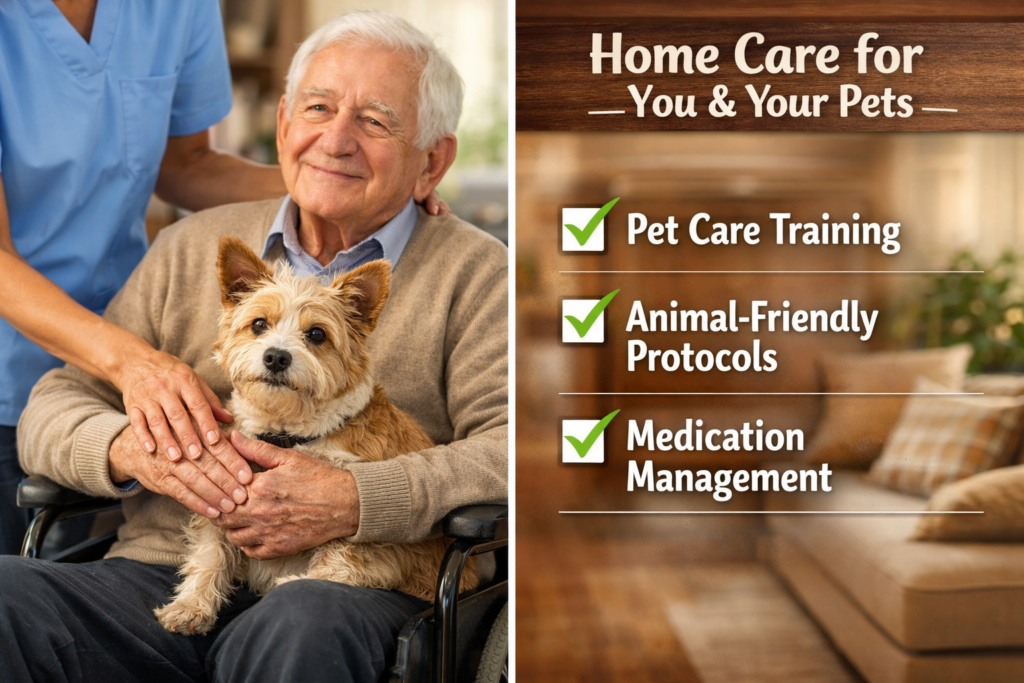
I’ve spent years writing about aged care issues, but nothing prepared me for the emotional stories I encountered when researching pet friendly home care. Time and again, I heard from older Australians who delayed seeking help because they feared losing their pets. Some had even declined necessary care services after being told their dog or cat was “incompatible” with home visits.
The statistics tell a compelling story. According to Animal Medicines Australia, approximately 69% of Australian households own a pet, with the highest rates among people aged 65 and older [1]. These aren’t casual relationships—for many seniors, pets provide:
- Companionship that combats loneliness and social isolation
- Purpose and routine through daily feeding, walking, and care responsibilities
- Physical activity that keeps seniors mobile and engaged
- Emotional support during health challenges and life transitions
- Security and a sense of safety, especially for those living alone
Research from La Trobe University found that older Australians with pets report significantly lower levels of loneliness and higher quality of life scores compared to their pet-free counterparts [2]. Yet historically, the aged care system treated pets as complications rather than contributors to wellbeing.
The Traditional Barriers That Kept Pets and Care Apart
Before pet friendly approaches gained traction, seniors faced numerous obstacles:
Worker Safety Concerns 🚧
Care agencies worried about dogs jumping on workers, cats causing allergies, or animals creating trip hazards in already challenging home environments.
Liability Issues
Insurance policies and organizational risk assessments often flagged pets as potential sources of injury claims, leading to blanket “no pet” policies.
Lack of Training
Care workers received no education about working safely around animals or recognizing when pets contribute positively to care outcomes.
Inflexible Service Models
Standardized care approaches didn’t account for the extra time needed to work in pet-friendly homes or the benefits of incorporating pets into daily routines.
Communication Gaps
Clients often didn’t know they could request pet-friendly workers or that their Home Care Package could include pet-related support.
These barriers meant countless older Australians faced impossible choices: accept help and rehome beloved companions, or struggle alone to avoid separation from their pets.
How Pet Friendly Home Care Exists: Here’s How It Works in Practice
The transformation toward pet-inclusive care didn’t happen overnight. It emerged from pioneering providers who recognized that person-centered care must include the “persons” who matter most to clients—including four-legged family members.
The Core Principles of Pet Friendly Home Care
1. Pets as Family Members, Not Obstacles
Modern pet friendly providers start from a fundamentally different premise: pets are integral to the client’s identity, routine, and wellbeing. Rather than asking “How do we work around this animal?” they ask “How do we support this relationship?”
When I spoke with Sarah, a care coordinator in Melbourne, she explained: “We document pets in our initial assessment just like we document family members. We want to know the pet’s name, temperament, daily routine, and how they interact with the client. This information shapes our entire care approach.”
2. Trained and Matched Care Workers
Pet friendly services invest in specialized training that covers:
- Safe approaches to homes with dogs, cats, birds, and other pets
- Reading animal body language to recognize stress or aggression
- Basic pet care tasks (feeding, water changes, letting dogs outside)
- Recognizing therapeutic benefits of human-animal interaction
- Emergency procedures if a pet becomes ill or escapes
Equally important is worker matching. Providers maintain detailed profiles noting which workers love animals, have pets themselves, or prefer pet-free environments. This matching process ensures positive experiences for everyone involved.
3. Flexible Service Delivery
Pet friendly care acknowledges that working in homes with animals requires flexibility:
- Extra time allowances for workers to safely enter homes and navigate around pets
- Adjusted schedules that accommodate pet routines (like morning walks or feeding times)
- Modified approaches to tasks—for example, a care worker might help a client walk their dog rather than just walking the client alone
- Communication protocols for workers to report concerns about pet health or behavior
What Services Can Include Pet-Related Support?
This is where pet friendly home care exists: here’s how it works becomes beautifully practical. Under Australia’s Home Care Package program, support can extend to pet-related activities that maintain the client’s independence and wellbeing.
Direct Pet Care Assistance 🐕
Care workers can help with:
- Feeding pets and refreshing water bowls
- Letting dogs out to the yard or taking them for short walks
- Basic grooming like brushing (not professional grooming)
- Cleaning litter boxes or pet areas
- Administering medications (with proper training and veterinary guidance)
Coordination and Planning
Support coordinators can arrange:
- Regular veterinary appointments and transportation
- Professional grooming services
- Pet sitting or boarding during hospital stays
- Emergency contacts for pet care
- Connections with local pet services and volunteers
Environmental Modifications
Package funds might support:
- Installing secure fencing so clients can safely let dogs out
- Non-slip flooring that benefits both seniors and pets
- Ramps or steps to help aging pets access furniture
- Automated feeders or water fountains for consistency
Indirect Benefits
Perhaps most importantly, care workers in pet friendly services incorporate pets into therapeutic activities:
- Encouraging clients to participate in pet care as physical therapy
- Using pet routines to structure the day and maintain cognitive function
- Facilitating social connections through dog walking or pet-related conversations
- Recognizing when pets provide emotional support during difficult care tasks
Similar to how aged care residents are storytellers in community projects, pets help seniors maintain their sense of identity and purpose.
Real Stories: Pet Friendly Home Care Transforming Lives
Tom and Rusty: A Partnership in Recovery
Tom, 78, suffered a stroke that left him with limited mobility on his right side. His occupational therapist recommended home care support, but Tom resisted—he worried no one would understand his relationship with Rusty, his aging Border Collie.
When a pet friendly provider was suggested, Tom was skeptical. “I thought they’d just tolerate Rusty, maybe feed him if I couldn’t,” he told me. “But my care worker, Linda, saw something different.”
Linda recognized that Tom’s motivation to recover was deeply tied to caring for Rusty. She incorporated the dog into Tom’s rehabilitation:
- Morning routines included Tom preparing Rusty’s breakfast, working on fine motor skills
- Short walks to the mailbox became opportunities for Tom to practice walking with Rusty beside him
- Brushing Rusty helped Tom rebuild strength and coordination in his affected arm
“Rusty became my physical therapist,” Tom laughed. “And Linda made sure we worked as a team. I recovered faster because I had a reason to push myself every day.”
Patricia’s Peace of Mind
Patricia, 82, lived alone with her two cats after her daughter moved interstate for work. When Patricia’s diabetes required more intensive management, her daughter researched home care options from afar.
“Every provider I called asked about Mum’s medical needs, her home layout, her mobility,” Patricia’s daughter Emma recalled. “But when I mentioned the cats, I’d get silence or ‘We’ll see what we can do.’ One provider actually suggested Mum rehome them!”
Then Emma found a provider with explicit pet friendly policies. The difference was immediate:
- The assessment included questions about the cats’ routines and temperaments
- Patricia’s care plan noted that feeding the cats was an important morning ritual that gave structure to her day
- Her care worker, James, was matched specifically because he had cats himself and understood their importance
- When Patricia was hospitalized unexpectedly, the provider coordinated with Emma to ensure the cats were fed and cared for
“Knowing Mum’s cats were part of her care plan—not an afterthought—gave me such relief,” Emma said. “And Mum’s mental health improved dramatically because she wasn’t constantly anxious about their wellbeing.”
For seniors weighing different care options, understanding the pros and cons of retirement village living often includes considering pet policies, making in-home care an attractive alternative.
Finding Pet Friendly Home Care Providers in Australia
If you’re searching for services that embrace your pet as part of your care team, here’s how to navigate the process effectively.
Questions to Ask Potential Providers
When interviewing home care agencies, don’t be shy about your pet priorities. Ask these specific questions:
About Policies 📋
- “Do you have an official pet friendly policy?”
- “Are there any types or sizes of pets you don’t accommodate?”
- “What happens if a care worker is uncomfortable with my pet?”
- “Can pet-related tasks be included in my care plan?”
About Training
- “What training do your workers receive about working with pets?”
- “How do you ensure worker safety in homes with animals?”
- “Do you have protocols for pet emergencies during visits?”
About Matching
- “How do you match workers to clients with pets?”
- “Can I request a worker who loves animals?”
- “What if the match isn’t working due to pet-related issues?”
About Practical Support
- “Can my care worker help with basic pet care tasks?”
- “Will my Home Care Package cover pet-related support?”
- “Can you coordinate with my veterinarian or pet services?”
- “What happens to my pet if I need emergency hospitalization?”
Red Flags vs. Green Lights 🚦
Red Flags (Consider looking elsewhere):
- Immediate negative reactions when you mention pets
- Vague responses about “trying to accommodate” without specific policies
- Suggestions that you should rehome your pet to receive care
- No mention of pet considerations in assessment or care planning
- Workers who seem fearful or dismissive of animals
Green Lights (Promising signs):
- Enthusiastic responses about their pet friendly approach
- Specific examples of how they’ve supported other clients with pets
- Detailed questions about your pet during the assessment
- Written policies you can review
- Worker profiles that note animal experience
- Flexibility in scheduling around pet routines
Using My Aged Care to Find Pet Friendly Services
When searching the My Aged Care provider directory, you can:
- Filter by service type and location
- Contact providers directly to ask about pet policies before formal assessment
- Request specific providers when setting up your Home Care Package
- Change providers if your current service isn’t meeting your pet-related needs
Remember: You have the right to choose providers that align with your values and lifestyle, including your relationship with pets.
The Business Case: Why More Providers Are Embracing Pets
The shift toward pet friendly services isn’t just good ethics—it’s good business. Forward-thinking providers are discovering significant advantages:
Improved Client Outcomes
Studies consistently show that seniors who maintain pet relationships during home care experience:
- Better medication adherence (pets provide routine and motivation)
- Increased physical activity (walking, playing, pet care tasks)
- Reduced depression and anxiety (companionship and purpose)
- Faster recovery from illness or surgery (emotional support)
- Greater satisfaction with care services (holistic approach)
Enhanced Worker Satisfaction
Care workers in pet friendly environments report:
- More meaningful client relationships (shared love of animals creates bonds)
- Greater job satisfaction (seeing clients thrive with their pets)
- Reduced burnout (positive interactions with animals provide stress relief)
- Pride in their organization (values-aligned workplace)
Competitive Advantage
In Australia’s growing home care market, pet friendly policies offer:
- Differentiation from competitors
- Positive word-of-mouth referrals
- Higher client retention (people don’t leave services that support their pets)
- Media and community recognition (feel-good stories attract attention)
Risk Management That Works
Rather than avoiding pets to reduce risk, successful providers manage risk proactively:
| Traditional Approach | Pet Friendly Approach |
|---|---|
| Ban or discourage pets | Assess and accommodate pets |
| No worker training | Comprehensive animal safety training |
| Reactive to incidents | Proactive protocols and matching |
| Pets seen as liability | Pets seen as therapeutic partners |
| One-size-fits-all policies | Individualized risk assessment |
This approach actually reduces risk because workers are prepared, clients are happier and more cooperative, and potential issues are identified early through proper assessment.
Pet Friendly Home Care Exists: Here’s How It Works With Different Animals
While dogs and cats are most common, pet friendly home care can accommodate various companions.
Dogs: From Chihuahuas to Great Danes 🐕
Small Dogs
- Often easier for workers to navigate around
- May be protective of owners, requiring gentle introduction protocols
- Can be incorporated into care routines (lap time during meals, companionship during personal care)
Large Dogs
- Require careful space management and worker training
- Can provide stability support for clients with mobility issues
- Often benefit from care workers who help with walks and outdoor time
Special Considerations
- Aging dogs may need care themselves (medications, mobility support)
- Protective breeds require proper introductions and consistent workers
- Dogs with anxiety may need gradual adjustment to new people
Cats: Independent But Integral 🐈
Cats present unique considerations:
Benefits
- Generally require less hands-on care than dogs
- Provide companionship without demanding walks
- Often comfort clients during rest periods
Challenges
- Can be skittish with new people
- Litter box maintenance may be needed
- Some workers have allergies (matching is crucial)
Care Integration
- Workers can help with feeding, water, and litter
- Indoor cats benefit from play and stimulation
- Medication administration (if trained)
Birds, Fish, and Other Pets 🐦
Pet friendly care extends beyond dogs and cats:
Birds
- Require cage cleaning and feeding
- Provide auditory companionship and routine
- May need specialized care knowledge
Fish and Aquatic Pets
- Tank maintenance can be incorporated into care plans
- Watching fish provides therapeutic benefits
- Relatively low impact on care worker activities
Small Mammals (rabbits, guinea pigs, etc.)
- Cage cleaning and feeding support
- Gentle handling for client interaction
- Veterinary coordination for health needs
The key principle remains: if the pet is important to the client’s wellbeing, it belongs in the care plan.
Funding Pet-Related Support Through Home Care Packages
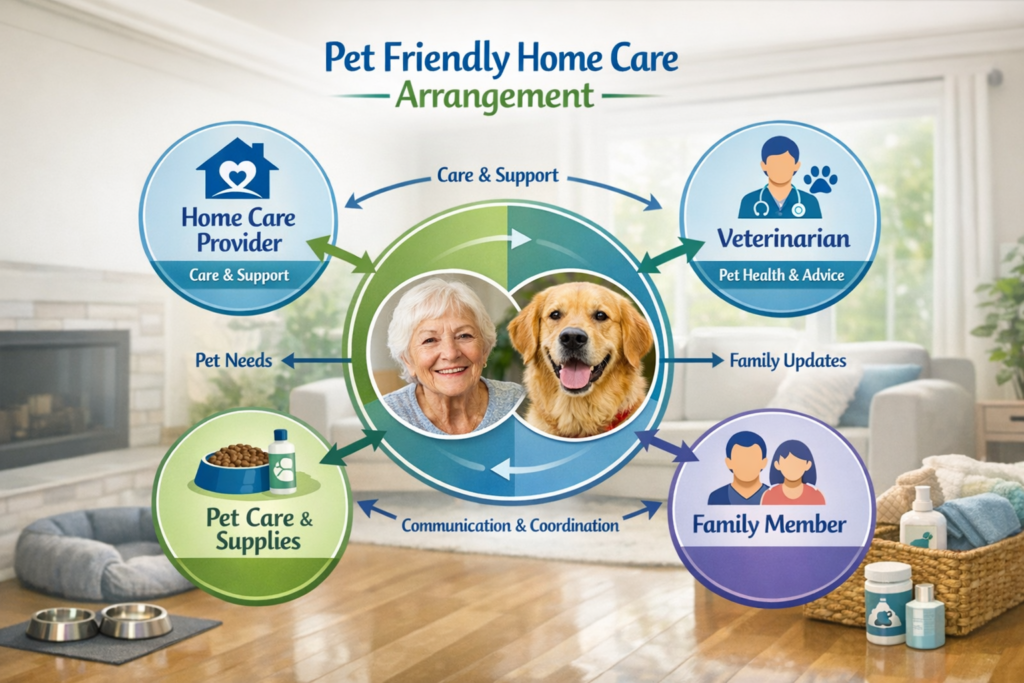
One of the most common questions I hear is: “Can I actually use my Home Care Package funds for pet-related help?” The answer is nuanced but generally yes—with important caveats.
What’s Allowed Under Home Care Package Guidelines
The Australian Government’s Home Care Package program is designed to support independence and wellbeing. Services must relate to your care needs, but that definition is broader than many realize.
Directly Allowable Services:
✅ Care worker assistance with pet care tasks during regular visits (feeding, letting dogs out, basic grooming)
✅ Support coordination to arrange pet services (vet appointments, grooming, boarding)
✅ Transport to veterinary appointments if you cannot drive
✅ Home modifications that benefit both you and your pet (secure fencing, non-slip floors)
✅ Emergency planning that includes pet care arrangements
The Wellbeing Connection:
Services are justified when they support your:
- Physical health (walking the dog provides exercise)
- Mental health (pet companionship reduces depression)
- Social connection (dog walking facilitates community interaction)
- Independence (maintaining pet ownership prevents premature residential care)
- Safety (well-cared-for pets reduce trip hazards)
What’s Generally Not Covered
❌ Professional grooming services (unless linked to your inability to manage pet hygiene affecting your home environment)
❌ Veterinary bills (medical care for pets isn’t covered, though transport to the vet may be)
❌ Pet food and supplies (ongoing costs remain your responsibility)
❌ Professional pet sitting (unless part of respite care planning)
Making the Case in Your Care Plan
To ensure pet-related support is included:
- Be explicit during assessment about your pet’s role in your daily life and wellbeing
- Document how pet care relates to your goals (maintaining independence, staying in your home, managing depression)
- Request specific tasks in your care plan (e.g., “Assist with taking dog to backyard,” “Help with cat feeding and litter maintenance”)
- Work with your support coordinator to frame services appropriately within package guidelines
- Keep records of how pet-related support contributes to your health outcomes
Just as planning your retirement income requires strategic thinking, maximizing your Home Care Package for pet-inclusive support needs thoughtful planning and clear communication.
Overcoming Common Challenges in Pet Friendly Home Care
Even with the best intentions, pet-inclusive care can face obstacles. Here’s how to address them:
Challenge 1: Worker Allergies or Fear
The Issue: A care worker assigned to you has pet allergies or is uncomfortable around animals.
The Solution:
- Request a different worker through your provider
- Be upfront about your pet during initial matching
- Ensure your provider maintains detailed worker profiles
- Consider air purifiers and regular cleaning to minimize allergens
- Never feel guilty—proper matching benefits everyone
Challenge 2: Pet Behavior Issues
The Issue: Your pet is protective, anxious, or aggressive with new people.
The Solution:
- Gradual introductions: Have workers visit briefly before care begins
- Consistent scheduling: Same workers at same times reduce pet stress
- Safe spaces: Create areas where pets can retreat during care activities
- Professional help: Consider pet behaviorists if issues persist
- Honest communication: Tell providers about behavioral challenges upfront
Challenge 3: Your Pet Needs Care Too
The Issue: Your aging pet requires medication, mobility support, or increasing care.
The Solution:
- Include pet care in your assessment and care plan
- Coordinate with your veterinarian about care worker involvement
- Consider pet-specific services (mobile vets, pet physiotherapy)
- Plan for eventual end-of-life decisions with family support
- Recognize when pet care becomes unsustainable and explore alternatives
Challenge 4: Emergency Situations
The Issue: You’re hospitalized unexpectedly and your pet needs immediate care.
The Solution:
- Create an emergency pet plan with your provider
- Identify backup caregivers (family, friends, neighbors)
- Keep pet information accessible (feeding schedule, vet contacts, medications)
- Consider pet insurance that covers boarding during emergencies
- Communicate the plan to all care workers and family members
Challenge 5: Provider Resistance
The Issue: Your current provider is unwilling to accommodate your pet or include pet-related support.
The Solution:
- Advocate clearly for your needs using wellbeing language
- Request policy clarification in writing
- Escalate to management if frontline staff are unhelpful
- Exercise your right to change providers—you’re not locked in
- Contact My Aged Care for support in finding alternatives
Remember: You deserve care that honors all aspects of your life, including your relationship with your pet. Don’t settle for services that ask you to choose between support and companionship.
The Future of Pet Friendly Home Care in Australia
The trend toward pet-inclusive care is accelerating, driven by research, consumer demand, and provider innovation.
Emerging Developments to Watch 🔮
Formal Certification Programs
Several organizations are developing pet friendly care certifications that providers can earn by meeting specific standards:
- Worker training requirements
- Policy documentation
- Client outcome tracking
- Safety protocols
- Emergency planning
Technology Integration
Smart home devices are supporting pet care:
- Automated feeders and water fountains
- Pet cameras for monitoring
- GPS collars for security
- Medication reminders
- Activity trackers for health monitoring
Specialized Services
New offerings are emerging:
- Pet therapy integration with formal animal-assisted therapy programs
- Veterinary partnerships providing coordinated care
- Pet hospice support for end-of-life care
- Intergenerational programs connecting seniors with young people through pet care
Policy Evolution
Advocacy efforts are pushing for:
- Clearer Home Care Package guidelines on pet-related support
- Recognition of pets in aged care quality standards
- Training requirements for all care workers
- Research funding to document outcomes
The Broader Aged Care Implications
The pet friendly movement connects to larger shifts in Australian aged care:
Person-Centered Care
Moving beyond medical models to honor individual identity, relationships, and preferences—including with animals. This aligns with initiatives like LGBT retirement communities that recognize diverse needs.
Aging in Place
Supporting people to remain in their homes longer requires accommodating the full ecosystem of their lives, pets included.
Preventive Health
Recognizing that pet companionship prevents loneliness, depression, and social isolation—major risk factors for premature residential care admission.
Workforce Innovation
Attracting and retaining care workers by offering meaningful, flexible work that aligns with values—including animal welfare.
Taking Action: Your Next Steps Toward Pet Friendly Care 🐾
If you’re an older Australian who needs care support but won’t compromise on your relationship with your pet, here’s your roadmap:
Immediate Actions (This Week)
- Document your pet’s role in your daily life and wellbeing
- Research providers in your area with explicit pet friendly policies
- Contact My Aged Care (1800 200 422) to discuss your needs
- Gather information about your pet (vet records, behavior, routine)
- Talk with family about your priorities and concerns
Short-Term Planning (This Month)
- Schedule assessments with 2-3 potential providers
- Ask the right questions about pet policies and training
- Request worker matching based on animal experience
- Create an emergency pet care plan
- Review your Home Care Package budget and goals
Long-Term Strategies (Ongoing)
- Build relationships with care workers who love your pet
- Communicate regularly about what’s working and what needs adjustment
- Document outcomes showing how pet-inclusive care benefits your health
- Advocate for pet friendly approaches in your community
- Plan ahead for your pet’s aging needs alongside your own
For Family Members Supporting Loved Ones
If you’re helping a parent or relative navigate home care:
- Take their pet relationship seriously—it’s not frivolous
- Advocate for pet-inclusive options during assessments
- Offer to help coordinate pet care during transitions
- Recognize the wellbeing benefits pets provide
- Never suggest rehoming without exploring all alternatives first
Much like considering things to do in retirement, maintaining pet relationships should be part of planning for fulfilling later years.
Conclusion: Choosing Care That Honors Your Whole Life
When Margaret from Brisbane—the woman I mentioned at the beginning—finally started receiving home care with Charlie by her side, something remarkable happened. Her recovery accelerated. Her mood improved. Her care worker, Emma, became not just a helper but a friend who understood that Charlie wasn’t a complication but a crucial part of Margaret’s healing.
“I used to dread getting old and needing help,” Margaret told me during our conversation. “I thought it meant losing everything that made me, me. But pet friendly home care exists: here’s how it works—and it’s shown me that getting older doesn’t mean giving up the relationships that matter most.”
That’s the heart of this movement: recognition that quality care honors the whole person, including their bonds with animal companions. Pets aren’t obstacles to work around or problems to solve—they’re partners in wellbeing, motivation for independence, and sources of joy that make the challenges of aging more bearable.
As Australia’s aged care system continues evolving toward truly person-centered approaches, pet-inclusive care isn’t a luxury or a special accommodation—it’s a fundamental aspect of respecting individual dignity and supporting wellbeing in all its forms.
If you’re facing decisions about home care, remember: you don’t have to choose between receiving support and keeping your beloved companion. Pet friendly home care exists, it’s growing, and it’s transforming lives across Australia. Your pet has been there for you through countless moments—now there are care services that ensure you can be there for each other through the years ahead.
The question isn’t whether pet friendly care is possible—it’s which provider you’ll choose to make it a reality. Start your search today, ask the right questions, and insist on services that honor every member of your family, including the furry ones. 🐾❤️
References
[1] Animal Medicines Australia. (2022). “Pets in Australia: A national survey of pets and people.” Animal Medicines Australia.
[2] La Trobe University. (2021). “Companion Animals and Aging: The Impact of Pets on Quality of Life in Older Australians.” Australian Research Centre in Complementary and Integrative Medicine.