
Nearly one in two adults over 65 doesn’t get enough protein in a single day, and the sneaky culprit isn’t dinner. It’s the snack drawer. That afternoon cookie, the salty crackers before bed, the “just a little something” that fills the gap but leaves the body wanting. Choosing healthy snacks for elderly loved ones isn’t about restriction, it’s about turning small bites into powerful nutrition wins that protect muscle, digestion, hearts, and independence.
Whether shopping for a parent, planning meals in a care setting, or navigating your own golden years, this guide breaks down exactly what to reach for, what to skip, and how to make smart snacking effortless.
Key Takeaways
- 🥚 Prioritize protein in snacks to help preserve muscle mass and strength.
- 🍎 Fiber and hydration matter, fresh fruit, veg, and water-rich foods support digestion.
- 🦷 Soft textures are essential for those with dental or swallowing challenges.
- 🧂 Low-sodium, low-sugar options protect heart and blood sugar health.
- 📦 Prep ahead: portioned, ready-to-grab snacks make healthy choices automatic.
Why Healthy Snacks for Elderly Adults Matter More Than You Think
Appetites often shrink with age, but nutrient needs don’t. In fact, older adults require more protein per pound of body weight than younger adults to fight sarcopenia (age-related muscle loss). Snacks become mini-meals, small, frequent chances to close nutrition gaps that main meals leave behind [1].
The right snack can:
- Stabilize blood sugar between meals
- Deliver calcium, vitamin D, and protein in one bite
- Prevent the “empty calorie trap” of chips and sweets
- Support hydration (especially important since thirst signals weaken with age)
- Make medications sit better on the stomach
Pull quote: “Snacking isn’t a bad habit for seniors, it’s a nutritional strategy. The question is what fills the plate.”
For families managing complex needs, working with a geriatric nutritionist can help translate general advice into a personalized plan.
The Five Nutrition Pillars for Senior Snacks
| Pillar | Why It Matters | Snack Example |
|---|---|---|
| Protein 🥚 | Preserves muscle & strength | Hard-boiled egg, Greek yogurt |
| Fiber 🌾 | Supports digestion, prevents constipation | Pear slices, oatmeal cup |
| Healthy Fats 🥑 | Heart & brain health | Avocado toast, unsalted nuts |
| Calcium 🧀 | Bone density | Cheese cubes, yogurt |
| Hydration 💧 | Prevents fatigue, UTIs, confusion | Watermelon, cucumber, smoothies |
Protein-Rich Picks for Muscle Maintenance
Protein is the non-negotiable star. Muscle loss accelerates after 60, increasing fall risk and reducing independence. Simple protein-packed snacks include [1]:
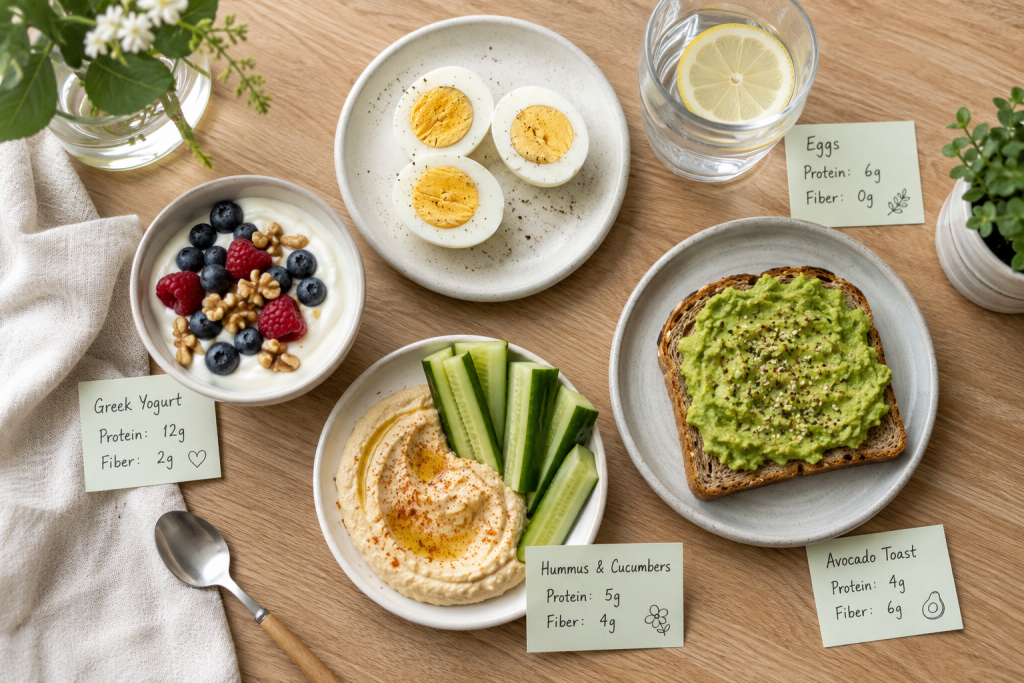
- Hard-boiled eggs (batch-cook 6 on Sunday)
- Greek yogurt with berries and a sprinkle of chopped walnuts
- Low-sodium turkey roll-ups with hummus and cucumber
- Cottage cheese with sliced peaches
- Edamame with a light dusting of herbs
For seniors who struggle to hit daily protein targets through food alone, protein supplements can be a helpful bridge, though whole foods should always come first when possible.
Fiber-Filled Choices for Digestive Health
Constipation affects up to 40% of older adults. Fiber-rich snacks are one of the gentlest solutions [1]:
- Fresh fruit, pears, apples, grapes, prunes
- Raw or lightly steamed veggie sticks with hummus
- Unsalted nuts and seeds (small handful)
- Oatmeal cups with cinnamon and berries
- Whole-grain crackers with nut butter
Explore more digestive-friendly options in this complete guide to high-fiber foods for seniors or the targeted high-fiber constipation relief guide.
Soft & Easy-to-Chew Options
Dental issues, ill-fitting dentures, or swallowing difficulties (dysphagia) make crunchy snacks risky. Softer alternatives include [1]:
- Applesauce blended with cottage cheese (protein + fiber, no chewing)
- No-sugar-added pudding or custard
- Smoothies, a nutrition powerhouse in a glass
- Ripe banana with soft nut butter
- Scrambled eggs with a touch of cheese
Smoothies deserve special mention: blending yogurt, spinach, frozen berries, and a spoon of oats delivers protein, fiber, calcium, and antioxidants in one easy-to-swallow serving [2].
Low-Sodium, Heart-Healthy Selections
High blood pressure is one of the most common concerns in later life. Skip the salty pretzels and reach for [1]:
- Unsalted nuts (almonds, walnuts, pecans)
- Mashed avocado or hummus on whole-grain toast
- Unsalted popcorn seasoned with rosemary or garlic powder
- Fresh fruit, naturally sodium-free
- Homemade veggie chips baked in olive oil
Whole Grains for Steady Energy
Whole grains release energy slowly, avoiding the sugar crash of white bread or cookies [2]:
- Oatmeal with fresh fruit and cinnamon
- Whole-grain toast with almond butter or avocado
- Whole-grain crackers with a slice of low-sodium cheese
- Overnight oats with Greek yogurt
Healthy Fats & Hydration Helpers
Avocado, nuts, seeds, and olive-based dips support heart and brain health [3]. Meanwhile, water-rich snacks quietly boost hydration [3]:
- 🍉 Watermelon and melon cubes
- 🥒 Cucumber slices with tzatziki
- 🍓 Strawberries and blueberries
- 🍅 Cherry tomatoes with mozzarella
For seniors who struggle to drink enough plain water, nutrition drinks or meal replacement shakes can supplement fluid and calorie intake.
How to Choose the Right Healthy Snacks for Elderly Individuals
There’s no universal “best snack”, the perfect choice depends on the person’s health profile, preferences, and abilities.
Match the Snack to the Health Condition
Snack choices should adapt to individual needs [5]:
- Diabetes: Pair carbs with protein, apple with peanut butter, not apple alone. Avoid sugary drinks and dried fruits in large amounts.
- High blood pressure: Prioritize potassium-rich foods (banana, avocado) and skip processed, salted items.
- Kidney disease: Watch potassium and phosphorus, consult a dietitian before adding nuts or dairy heavily.
- Dysphagia: Stick to purees, smoothies, yogurt, and soft-cooked options.
- Poor appetite: Choose nutrient-dense mini-portions, a spoon of nut butter beats a plate of lettuce.
Avoid These Common Snack Traps
Skip or strictly limit [4]:
- ❌ Sugary cookies, cakes, candy
- ❌ Deep-fried chips and salty crackers
- ❌ Sugary sodas and sweetened juices
- ❌ Processed meats (bacon, salami), high in sodium and preservatives
- ❌ Ice cream in large portions
Occasional treats are fine, but daily habit? That’s where trouble builds.
Portion & Timing Tips
- Serve snacks 1.5-2 hours before meals to avoid killing appetite
- Use small plates and bowls, they make portions feel generous
- Keep snacks visible and easy to reach (arthritic hands don’t love twist-off lids)
- Aim for 2 planned snacks per day rather than random grazing
Prep-Ahead Strategies That Actually Work
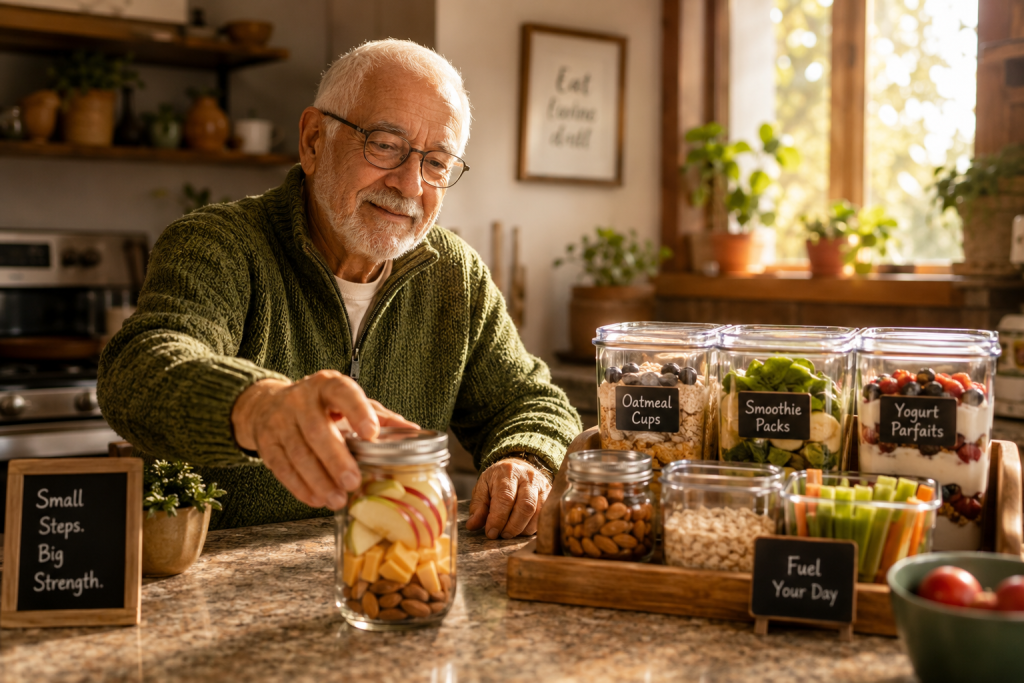
The single biggest predictor of healthy snacking? Availability. If chopped fruit is at eye level in the fridge, it gets eaten. If it’s buried behind leftovers, it rots [1].
Try this Sunday routine:
- Hard-boil 6 eggs
- Portion nuts into small containers (1 oz each)
- Wash and cut veggie sticks; store in water in the fridge
- Pre-portion Greek yogurt into single-serve cups
- Slice cheese into cubes
- Make a batch of overnight oats in 4 mason jars
Ten minutes of prep = a full week of grab-and-go nutrition.
Sample One-Day Snack Plan
| Time | Snack | Key Nutrients |
|---|---|---|
| 10:00 AM | Greek yogurt + berries + walnuts | Protein, fiber, healthy fats |
| 3:00 PM | Whole-grain crackers + hummus + cucumber | Fiber, protein, hydration |
| 7:30 PM | Warm milk + banana slices | Calcium, potassium, tryptophan |
Making Snacking Social
Snacks taste better with company. Whether in a retirement community or at home, sharing a small plate turns nutrition into a social ritual. Book clubs, garden chats, or a weekly grandkid visit can all be built around a healthy snack tray.
Conclusion
Picking healthy snacks for elderly loved ones is one of the most powerful, and most overlooked, ways to protect independence, energy, and joy in later life. The formula is refreshingly simple: prioritize protein, add fiber, choose soft when needed, watch sodium and sugar, and prep ahead.
Your next steps:
- Audit the pantry today, toss (or donate) the salty, sugary offenders.
- Stock the fridge with Greek yogurt, eggs, fresh fruit, and pre-cut veggies.
- Pick 3 snacks from this guide to try this week.
- Talk to a professional, a doctor or geriatric nutritionist can tailor advice to specific health conditions.
- Make it social, snacks shared are snacks enjoyed.
Small bites, big impact. Start with tomorrow’s mid-morning snack. 🍎
References
[1] Healthy Snack Ideas For Seniors – https://www.brightstarcare.com/blog/healthy-snack-ideas-for-seniors/?utm_source=openai
[2] Healthy Snacks For The Elderly – https://thegeriatricdietitian.com/healthy-snacks-for-the-elderly/?utm_source=openai
[3] Healthy Snacks For The Elderly – https://www.caremark.co.uk/news/healthy-snacks-for-the-elderly/?utm_source=openai
[4] Healthy Snacks – https://www.elderly.gov.hk/english/healthy_ageing/healthy_diet/meal_planning_healthy_recipes/healthy_snacks.html?utm_source=openai
[5] Healthy Snacks For Seniors That Make Every Bite Count At Home – https://www.intouchealthcaresolutions.com/healthy-snacks-for-seniors-that-make-every-bite-count-at-home?utm_source=openai
[6] Healthy Snack Ideas For Seniors – https://robsonseniorliving.com/blog/healthy-snack-ideas-for-seniors/?utm_source=openai